Riyadh Global Medical Biotechnology Summit Announces Scientific Program for 2026 Edition
The working hypothesis is straightforward: RGMBS 2026 is positioning biotechnology as a full translational pipeline, not as a collection of isolated laboratory announcements.
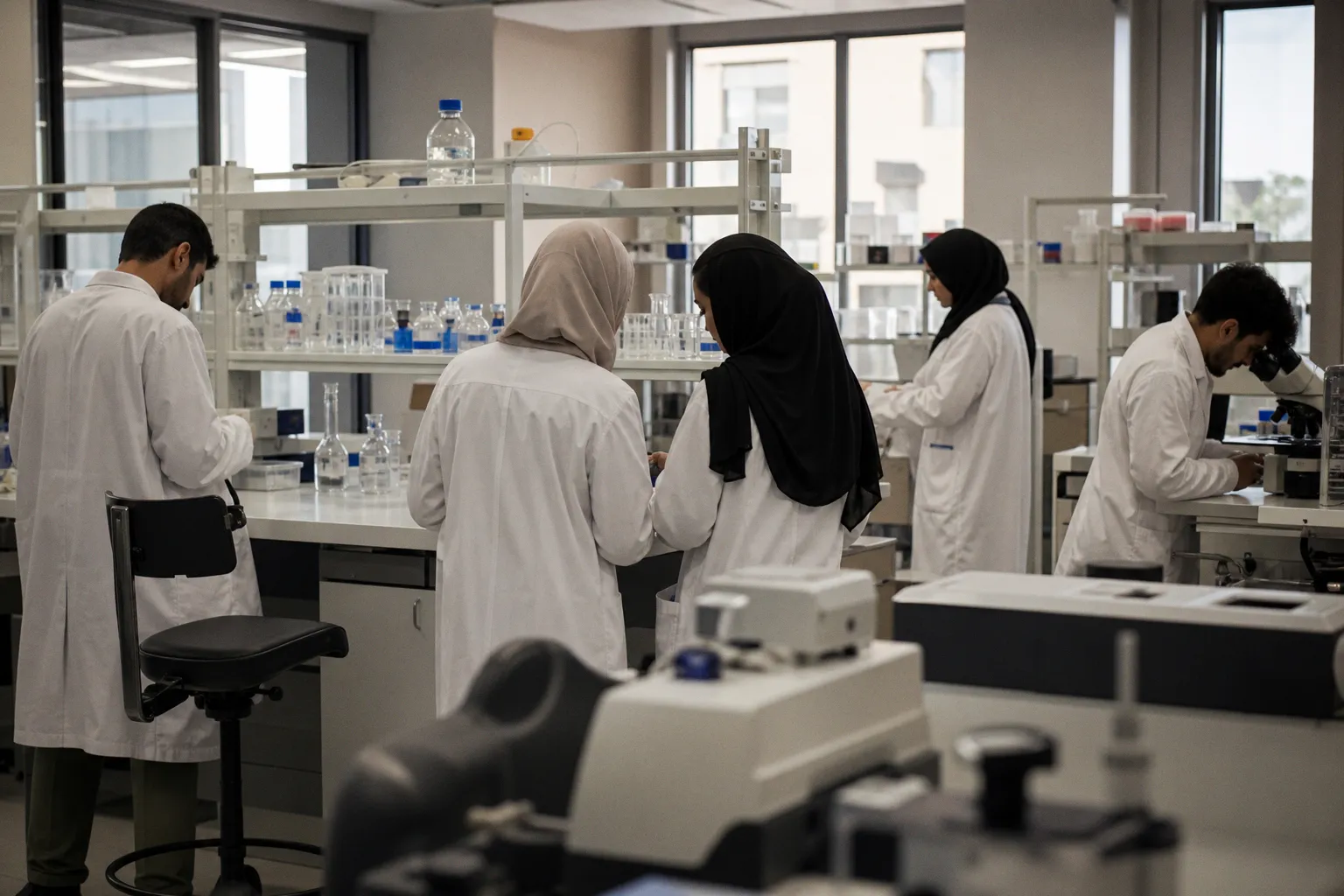
The program is built around the biomedical pathway, not a single technology
RGMBS 2026 is scheduled for 14–16 September 2026 at the Sofitel Riyadh Hotel and Convention Center. BioSpace reports that it is organized by the Ministry of National Guard Health Affairs and hosted by King Saud bin Abdulaziz University for Health Sciences and the King Abdullah International Medical Research Center, with the Ministry of Investment as strategic partner.
The announced program is structured across six thematic tracks:
- artificial intelligence in biotechnology;
- multi-omics and localization;
- biotech investment;
- immunology;
- bioengineering and synthetic biology;
- biotech workforce development.
That structure matters because metabolism rarely respects disciplinary borders. A nutrition intervention can involve genotype, microbiome-adjacent measurements, inflammatory signaling, pharmacokinetics of bioactive compounds, and manufacturing quality if it moves toward a therapeutic product. A summit program that links discovery, manufacturing, regulatory science, and commercialization is therefore more relevant than a meeting focused only on early-stage molecular enthusiasm.
The stated alignment with Saudi Arabia’s National Biotechnology Strategy is also explicit. BioSpace reports that the strategy targets a biotechnology contribution of $34.6 billion to non-oil GDP by 2040. That figure is an economic target, not a clinical efficacy endpoint; it should not be confused with evidence that any specific intervention improves metabolic outcomes.
Multi-omics and quantitative medicine are the nutrition-adjacent watchpoints
For this publication’s audience, the most important track is likely genomics and multi-omics. BioSpace reports that the program includes population-scale genomics, AI-enabled drug discovery, domestic biomanufacturing, regulatory science, commercialization, and investment. It also notes a dedicated session on the GSK and KAIMRC alliance in cancer multi-omics, and confirms participation from Dr. Hesham A. Abdullah of GSK and Dr. Howard Jacob of AbbVie in the genomics and multi-omics track.
The practical interpretation should remain conservative. Multi-omics can generate biologically dense datasets, but density is not the same as causality. In nutrition and metabolic science, the common failure mode is familiar: biomarkers shift, pathway diagrams become persuasive, and clinical endpoints remain statistically unconvincing or insufficiently replicated.
A useful filter for any post-summit claims will be:
- Was the reported outcome clinical, biochemical, or merely computational?
- Were effect sizes reported, or only mechanisms and pathway enrichment?
- Was bioavailability or pharmacokinetic behavior measured where a compound or biologic is involved?
- Were findings linked to reproducible patient stratification, or only to exploratory omics clusters?
- Did the work address manufacturing and regulatory constraints, or stop at discovery-stage plausibility?
These questions are dull by design. They are also the difference between translational nutrition science and decorated molecular storytelling.
Gene therapy, immunology, and biomanufacturing enter the same frame
The speaker list reported by BioSpace places high-end biomedical science alongside industry and investment infrastructure. Confirmed academic participants include Dr. Keith T. Flaherty, delivering a keynote in the immuno-oncology track; Dr. Matthew H. Porteus, associated with CRISPR-based correction of inherited blood disorders; and Dr. Alex Shalek of MIT. Additional confirmed speakers include Dr. Vijay Kuchroo, Dr. Nikolay Dokholyan, Professor Xiaoguang Lei, Professor Chris Schofield, Dr. Mehmood Khan, and Dr. Hayat Sindi.
Industry and investment representation is also prominent. BioSpace reports participation from Dr. Marcello Maresca of AstraZeneca in a panel on the “Saudi Gene Therapy Localization Journey,” Dr. Seng H. Cheng of Alexion, AstraZeneca Rare Disease, Dr. Kasim Kutay of Novo Holdings, and Dr. Stephen Squinto of J.P. Morgan Life Sciences Private Capital. The investment program includes sessions on de-risking biomanufacturing investment and the role of sovereign wealth funds in biotechnology. The bioengineering track is reported to culminate in a session on the Lifera contract development and manufacturing model and the capital architecture needed to scale domestic biomanufacturing.
For clinical nutrition and metabolism, the strict verdict is this: the announcement is scientifically relevant, but not clinically actionable. It identifies where future evidence may emerge—multi-omics, quantitative medicine, synthetic biology, and scalable manufacturing—but it does not itself establish efficacy, safety, or dietary guidance. Until trial outcomes and statistically interpretable endpoints are available, the appropriate response is surveillance, not adoption.