GEA consolidates biotechnology center to accelerate scale-up
Think “biotech” means lab coats and press-release fog? Not this time. Food and Drink Technology and Asia Food Journal report that GEA has consolidated a technology center for industrial biotechnology…
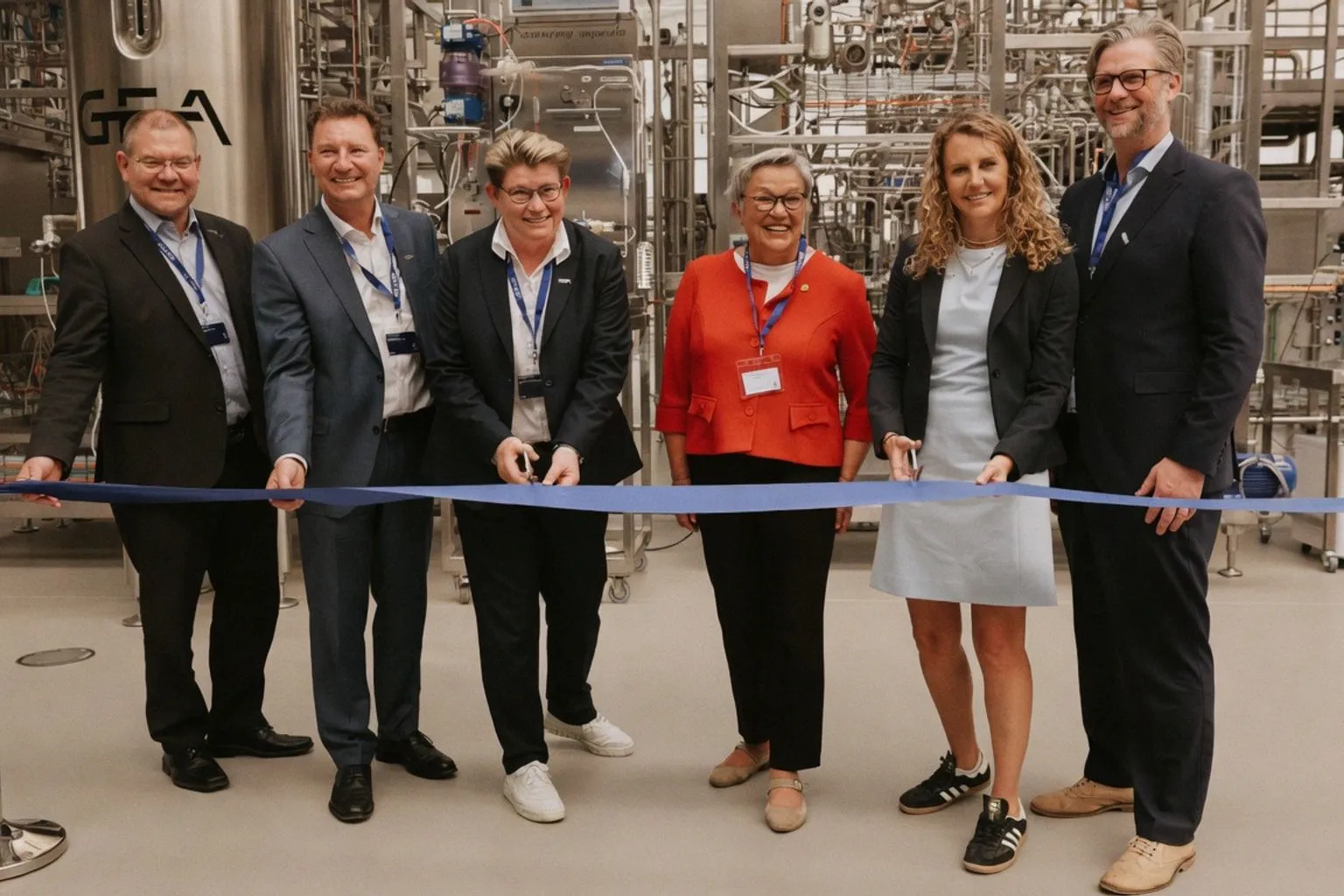
Think “biotech” means lab coats and press-release fog? Not this time. Food and Drink Technology and Asia Food Journal report that GEA has consolidated a technology center for industrial biotechnology in Sarstedt, Germany, with the stated aim of accelerating scale-up. For anyone watching food science, fermentation, novel ingredients, or nutrition-tech manufacturing, that one phrase — scale-up — is where the pretty prototype either becomes a real product or quietly dies in stainless steel.
Why this consolidation matters more than the headline suggests
GEA is being reported as consolidating its biotechnology center, or technology centre for industrial biotechnology, in Sarstedt, Germany. The available source snippets do not give us the full operational blueprint, so let’s not pretend we have the plant tour badge. No numbers. No equipment list. No promised output. No magic timeline.
But the strategic signal is still clear enough: the focus is industrial biotechnology, and the purpose being reported is faster scale-up.
In food and nutrition, scale-up is the ugly middle child between “it worked in the lab” and “you can actually buy it.” A strain performs nicely in a flask. A protein behaves in a bench trial. A fermentation run looks clean at pilot scale. Then someone asks whether it can survive industrial volumes, cleaning cycles, heat transfer limits, contamination risk, downstream processing, and cost pressure.
That is where many “future of food” stories stop being futuristic and start being invoices.
So when a major processing-technology player consolidates biotech capability around scale-up, the interesting part is not the corporate real estate. It is the bottleneck being targeted: turning biotech processes into repeatable manufacturing.
How it actually affects food and nutrition companies
If you make, buy, formulate, or evaluate biotech-derived ingredients, this is the practical read: infrastructure around scale-up is becoming a competitive layer, not a back-office detail.
Industrial biotechnology can touch a wide set of food-science problems — ingredient production, fermentation processes, processing aids, nutritional compounds, and other bio-based systems. The report does not specify which applications GEA is prioritizing here, so don’t overfit the headline. The useful takeaway is broader: companies are still trying to close the gap between clever biology and dependable factory economics.
That matters because food products do not live in pitch decks. They live in specifications.
Can the process run consistently? Can it be cleaned? Can it be validated? Can downstream steps separate, concentrate, dry, or stabilize the target ingredient without wrecking function? Can the system move from “promising” to “boringly repeatable”?
Boring is underrated. In food technology, boring means fewer failed batches, fewer reformulations, fewer awkward calls with QA, and fewer marketing teams trying to explain why a launch slipped again.
For diet and nutrition readers, the point is not to cheer every biotech headline. It is to ask whether the manufacturing pathway is getting less fragile. Better scale-up support can help promising ingredients move closer to commercial reality — but only if the process economics, quality controls, and regulatory status line up. GRAS status, novel food clearance, labeling rules, and safety documentation still matter. A shiny scale-up center does not delete the paperwork.
What to watch next before buying the hype
Here is the no-nonsense lens.
First, watch for specifics. Which processes are being scaled? Fermentation? Cell-based production? Enzyme-driven systems? Ingredient recovery? The current snippets only confirm a consolidated industrial biotechnology center in Sarstedt and the scale-up angle. Anything beyond that needs better sourcing.
Second, look for proof of throughput and repeatability, not adjectives. “Accelerate” sounds nice. In this sector, the proof is whether companies can move from lab data to pilot runs to industrially relevant production without changing the product’s function, safety profile, or cost structure.
Third, ask who benefits. Ingredient startups may need scale-up partners. Established food companies may want de-risked processing routes. Equipment suppliers may want to sit closer to the messy problems their customers hit when biology meets steel.
And finally: don’t confuse consolidation with completion. A consolidated center can be a serious step, but it is not the same as commercial success. The real test comes later, when the processes running through that center show up as stable ingredients, approved products, and manufacturing specs that don’t fall apart under pressure.
Bottom line: GEA’s reported consolidation in Sarstedt is worth watching because scale-up is the choke point in industrial biotech. Not the glamorous part. The important part.