Select Swanson SAM-e dietary supplements by enteric coating
S-adenosyl-L-methionine, commonly abbreviated SAM-e, occupies a paradoxical position in the supplement market.
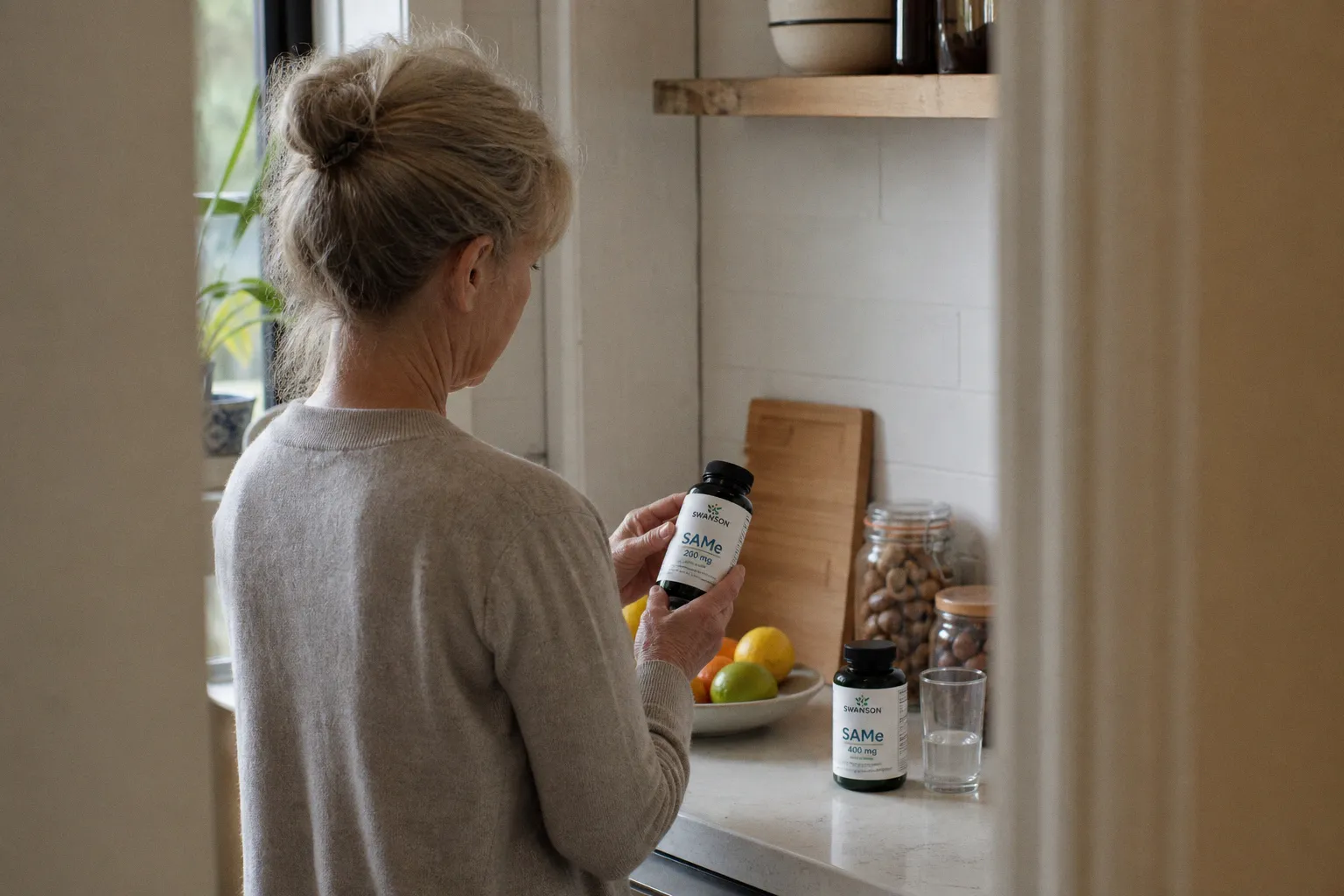
The chemical fragility of S-adenosyl-L-methionine
Three environmental variables govern SAM-e degradation kinetics:
- Moisture: The sulfonium bond hydrolyzes rapidly under ambient humidity, producing S-adenosylhomocysteine and 5'-methylthioadenosine as primary degradation products. Neither metabolite retains the methyl-donor activity of the parent compound.
- Temperature: Reaction kinetics follow Arrhenius behavior. Storage above 25°C measurably accelerates decomposition, and exposure to temperatures exceeding 40°C within shipping containers has been documented to compromise tablet potency before the product reaches the consumer.
- Gastric pH: The acidic environment of the stomach (pH 1.5–3.5 in the fed state) protonates the adenine ring and accelerates cleavage of the glycosidic bond, rendering unprotected SAM-e largely inactive before the molecule can reach the jejunum, where absorption occurs via organic cation transporters (OCT1 and OCT3 isoforms).
This trifecta of vulnerabilities establishes the foundational selection criterion for any SAM-e supplement. Without protection against all three degradation vectors, the consumer purchases a degraded product regardless of the labeled dosage strength. The implications for product evaluation are direct and non-negotiable.
Enteric coating as a pharmacokinetic requirement
Enteric coating is a pharmaceutical-grade polymer barrier engineered to resist dissolution in gastric fluid (below approximately pH 5.0) and to disintegrate only upon encountering the higher pH environment of the small intestine (above pH 6.0). For a molecule as pH-sensitive as SAM-e, this technology is not a marketing embellishment but a pharmacokinetic necessity. Without it, the labeled milligram content and the bioavailable milligram content diverge by orders of magnitude.
The mechanistic sequence governing an enteric-protected tablet proceeds as follows:
1. The coated tablet transits the stomach intact, the polymer resisting proton-driven dissolution.
2. Upon entering the duodenum, the elevated pH triggers polymer ionization and coating dissolution.
3. The liberated SAM-e encounters intestinal enterocytes, where organic cation transporters facilitate absorption.
4. The intact molecule enters portal circulation and is distributed to hepatic and central nervous system tissues.
The differential between coated and uncoated formulations is not incremental; it is categorical. Pharmacokinetic studies have repeatedly demonstrated that unprotected SAM-e delivers only a small fraction of its labeled content to systemic circulation, while enteric-protected formulations preserve a substantially higher proportion of the dose for intestinal uptake. Non-enteric-coated SAM-e products represent a supplement category in which the labeled content and the bioavailable content cannot be assumed to correspond within any useful margin. This is the single most consequential variable in the entire selection process, and it is determined entirely at the manufacturing stage rather than at the point of consumption.
Without enteric protection, the labeled milligram content of a SAM-e tablet bears no reliable relationship to the milligram content that reaches systemic circulation.
Swanson markets its SAM-e products with explicit "enteric-coated" labeling. This claim should be verified against the product image and, where available, the certificate of analysis. The specific proprietary polymer formulation is not disclosed, which constitutes a limitation in transparency; however, the functional requirement—gastric acid resistance—is the parameter of biochemical relevance, and this is the parameter consumers should evaluate. The specific polymer chemistry is secondary to the demonstrated functional outcome.
Dosage evaluation: 200 mg versus 400 mg
Selection between Swanson's two standard dosage strengths depends on the intended application and the titration strategy employed. A direct comparison clarifies the selection logic:
| Parameter | 200 mg strength | 400 mg strength |
|---|---|---|
| Standard daily regimen | 1–2 tablets, allowing stepwise titration | 1 tablet, often at the higher end of consumer practice |
| Titration flexibility | High; gradual escalation in 200 mg increments | Low; half-tablet splitting required if lower dose is desired |
| Per-tablet exposure to degradation | Lower (smaller surface area, lower moisture load) | Higher; demands stricter packaging integrity |
| Typical positioning in published trial protocols | Initial intervention phase (2–4 weeks) | Maintenance phase or higher-dose protocols |
| Cost per milligram of SAM-e | Generally higher | Generally lower |
Data suggests that consumers new to SAM-e supplementation typically begin with the 200 mg strength to assess tolerance before considering escalation. The 400 mg strength is most often selected by consumers who have established tolerance and require a higher dose under the guidance of a healthcare provider. Trial protocols in the published literature most commonly employ doses ranging from 600 mg to 1,600 mg daily, distributed across multiple administrations; Swanson's labeled strengths serve as building blocks for these regimens.
Critically, the selection between 200 mg and 400 mg must not be conflated with the selection of enteric coating. Both strengths require identical coating integrity. A 400 mg tablet that lacks enteric protection is no more bioavailable than a 200 mg tablet with the same deficiency.
Blister packaging as the secondary stability safeguard
Enteric coating addresses gastric pH. It does not address moisture or thermal exposure during the shelf life of the product. This second tier of degradation risk is governed by packaging architecture, and it is the dimension on which many supplement evaluations neglect to focus.
Swanson markets SAM-e in two principal packaging formats:
- Blister packs: Individual tablets sealed in aluminum or composite foil cavities. Each tablet is isolated from atmospheric moisture and oxygen until the moment of use.
- Bottles (HDPE): Multiple tablets contained within a single desiccated environment. The integrity of the factory seal and the activity of the included desiccant determine long-term stability.
Blister packaging represents the more conservative choice from a stability perspective. Each tablet remains in a hermetically sealed microenvironment, eliminating the cumulative moisture exposure that occurs once a bottle is opened. This consideration carries measurable weight: once a bottle is breached, the remaining tablets begin a degradation countdown under ambient household conditions, regardless of how promptly the cap is replaced. For consumers who travel, who use SAM-e intermittently, or who simply purchase in larger quantities to reduce per-tablet cost, blister packaging imposes a discipline that bottle packaging does not. It enforces unit-by-unit consumption rather than allowing a half-consumed bottle to sit for weeks while degradation proceeds unchecked.
The principle of selecting protective infrastructure to preserve asset integrity—whether for moisture-sensitive bioactive compounds or for digital assets requiring distributed redundancy—follows a consistent evaluative logic. The framework for selecting decentralized storage for digital game assets illustrates how stability criteria must be matched to the specific vulnerabilities of the asset in question; the same principle governs SAM-e selection, where the vulnerabilities are molecular rather than digital.
A practical guideline follows:
- For consumers using SAM-e intermittently, blister packaging minimizes the cumulative degradation risk associated with repeated bottle openings.
- For consumers using SAM-e continuously at a fixed daily dose, bottle packaging may be acceptable provided the product is consumed within a defined window after first opening and stored under controlled conditions (below 25°C, below 60% relative humidity).
Biological mechanisms and the limits of supplementation
The rationale for SAM-e supplementation derives from its endogenous roles, which are sufficiently documented to justify the supplement's market position while remaining insufficient to support therapeutic claims. The principal mechanistic pathways include:
- Methylation: SAM-e donates a methyl group to a wide range of acceptors, including DNA, RNA, proteins, phospholipids, and neurotransmitters. The product, S-adenosylhomocysteine, is subsequently hydrolyzed to homocysteine, linking SAM-e metabolism to one-carbon cycle homeostasis. Impaired methylation capacity has been implicated in hepatic dysfunction, neurodegenerative processes, and altered neurotransmitter turnover, providing a biochemical rationale for exogenous SAM-e administration when endogenous synthesis is insufficient.
- Neurotransmitter synthesis: Through methylation reactions, SAM-e contributes to the biosynthesis of serotonin from 5-hydroxytryptophan and to the conversion of norepinephrine to epinephrine. These pathways provide a mechanistic basis for the supplement's investigation in mood-related applications, though the magnitude of central nervous system effect achievable through oral supplementation remains a subject of ongoing investigation.
- Cartilage maintenance: In chondrocyte cultures, SAM-e supports proteoglycan synthesis and reduces inflammatory cytokine expression. This observation provides a mechanistic rationale for its investigation in joint health applications, although extrapolation from in vitro findings to clinical joint outcomes requires caution.
It must be emphasized that SAM-e is regulated as a dietary supplement in the United States, not as an FDA-approved drug. Statements that SAM-e "treats" or "cures" depression, osteoarthritis, or any other clinical condition are not supported by the supplement's regulatory classification. Trials indicate statistically significant effects in specific clinical contexts, but these effects pertain to investigational drug formulations and dosing regimens that differ from supplement-level dosing. Consumers should evaluate SAM-e on the basis of its biochemical plausibility and its role as a methylation precursor, not on the basis of therapeutic claims that fall outside its regulatory scope.
Selection protocol
For consumers evaluating Swanson SAM-e dietary supplements, the selection logic proceeds in a defined sequence:
1. Verify enteric coating. Explicit "enteric-coated" labeling should be confirmed on the product page and on the physical packaging. Absence of this designation disqualifies the product regardless of price or dosage strength.
2. Select dosage strength based on titration strategy. The 200 mg strength is the appropriate starting point unless a higher dose has been previously established under healthcare provider guidance.
3. Evaluate packaging format. Blister packaging is preferred for intermittent use or for long storage intervals. Bottles are acceptable only when consumption rate matches the post-opening stability window.
4. Inspect the product upon receipt. Tablets should be intact, without visible chipping of the coating. Damaged coatings compromise the gastric acid barrier and cannot be salvaged by adjusting dosage.
5. Maintain storage conditions below 25°C and below 60% relative humidity. Refrigeration is acceptable but introduces condensation risk upon opening; the container should be allowed to equilibrate to room temperature before the seal is breached.
This protocol addresses the three degradation vectors—gastric pH, moisture, and temperature—and aligns the selection criteria with the molecule's biochemical vulnerabilities. The sequence is not advisory; it is the logical consequence of the compound's instability profile.
The selection of a SAM-e supplement is not a comparison of brands or dosages; it is a verification that the delivery system matches the molecule's instability profile.
Verdict
Among the criteria that govern Swanson SAM-e supplement selection, enteric coating is the only non-negotiable parameter. A non-enteric-coated SAM-e product, irrespective of its labeled dosage or its marketing claims, cannot deliver the molecule to its site of absorption in sufficient quantities to support the biochemical effects that justify its use. Dosage strength selection (200 mg versus 400 mg) and packaging format (blister versus bottle) are secondary considerations that refine the regimen but cannot compensate for coating failure.
Data suggests that consumers who prioritize enteric-coated, blister-packed SAM-e at a dosage appropriate to their titration strategy obtain a product whose labeled content corresponds more closely to its bioavailable content than those who select on price or convenience alone. The supplement is not a pharmaceutical intervention, and its effects should be evaluated within the regulatory and biochemical framework appropriate to a methylation precursor—not within the framework of a therapeutic agent. The verdict on any Swanson SAM-e product reduces to a single test: does the delivery system preserve the molecule's integrity from manufacture to absorption? Only products that pass this test warrant consideration on any other criterion.