Compare Krill Oil Phospholipid Percentages Before Purchasing
The biochemical hypothesis driving premium krill oil marketing — that phospholipid-bound omega-3 fatty acids demonstrate superior bioavailability relative to triglyceride-bound fish oil — rests on a specific molecular claim.
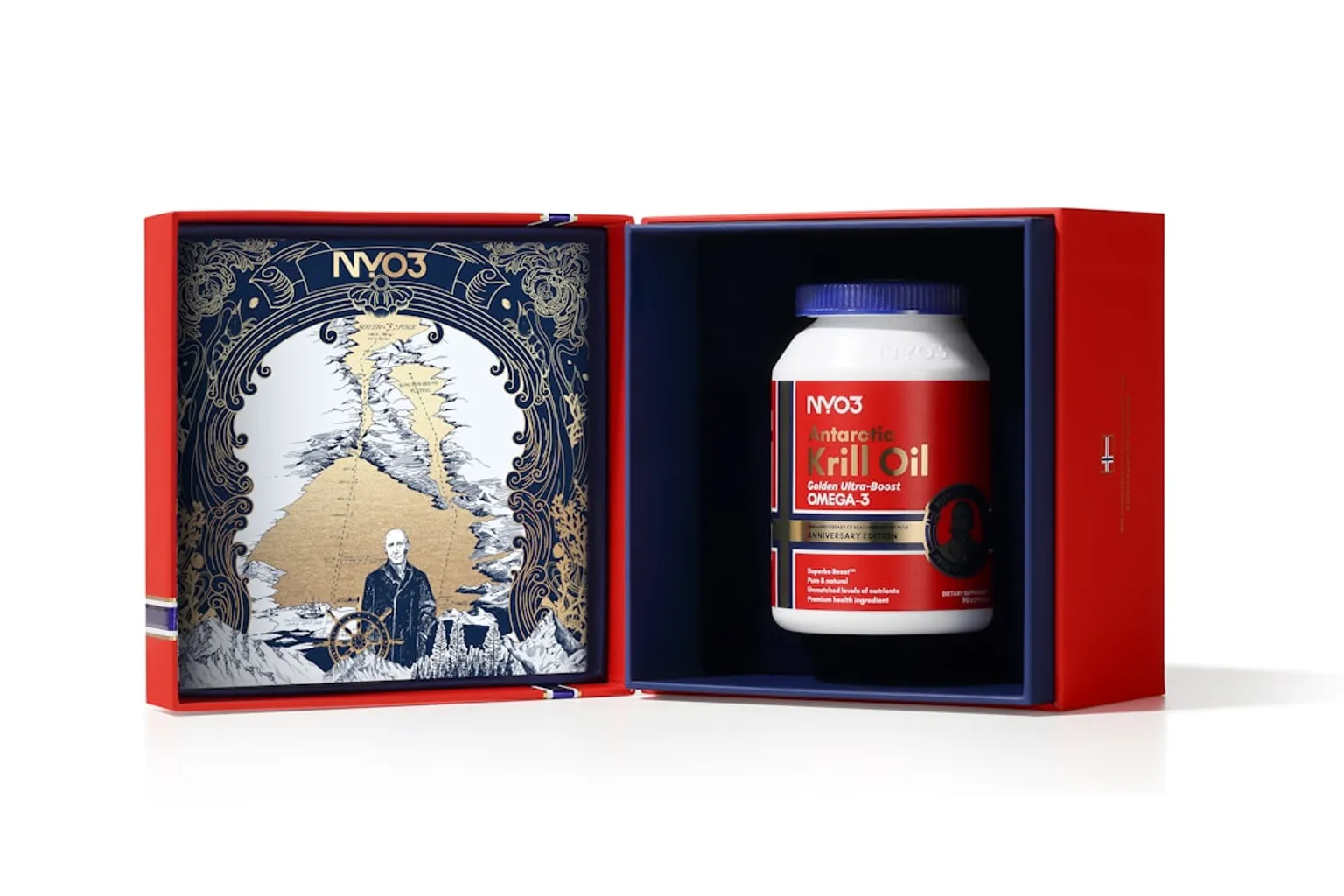
For consumers seeking to compare krill oil phospholipid percentages before purchasing, the central analytical question is whether the supplement contains the 30%–40% phospholipid concentration that defines the current industry benchmark for high-quality Antarctic krill oil. The framework below provides the biochemical and regulatory basis necessary to make that comparison with precision.
The Structural Advantage: Phospholipids vs. Triglycerides in Omega-3 Delivery
The primary distinction between krill oil and conventional fish oil lies in the molecular vehicle carrying EPA and DHA. In fish oil, these long-chain polyunsaturated fatty acids are predominantly esterified to glycerol, forming triglyceride molecules that require extensive emulsification in the small intestine before absorption. In krill oil — derived from Antarctic euphausiids, primarily *Euphausia superba* — a substantial fraction of EPA and DHA is bound to phospholipids, molecules featuring a hydrophilic phosphate head group and hydrophobic fatty acid tails.
This structural difference carries measurable biochemical consequences. Triglycerides depend on bile salt-mediated emulsification followed by lipase hydrolysis to liberate free fatty acids for enterocyte uptake. Phospholipids, functioning as biological surfactants, are thought to integrate into mixed micelles with reduced energetic overhead, potentially accelerating absorption kinetics. Trials indicate that the resulting fatty acids are then incorporated into cell membrane phospholipid bilayers with greater efficiency, though the translation from enhanced membrane integration to clinically significant outcomes remains a subject of active investigation.
Phospholipid-bound omega-3s integrate into mixed micelles with greater efficiency than triglyceride-bound forms, though the leap from membrane incorporation to measurable clinical endpoints requires further randomized trial validation.
Decoding the Label: Why Total Omega-3 Content Can Be Misleading
A common marketing tactic across the supplement industry involves emphasizing total omega-3 content per softgel — often quantified at 500 mg, 1000 mg, or higher. For consumers who compare krill oil phospholipid percentages before purchasing, this figure alone is insufficient. Total omega-3 content represents the sum of EPA and DHA irrespective of molecular carrier, offering no insight into the proportion bound to phospholipids versus triglycerides or other lipid fractions.
A product advertising 1000 mg of total omega-3s may contain krill oil with a phospholipid concentration below 20%, diluting the bioavailability argument to near-irrelevance. Conversely, a product delivering 500 mg of total omega-3s at a phospholipid percentage within the 30%–40% benchmark will provide a substantially greater quantity of phospholipid-bound EPA and DHA per softgel.
To conduct a rigorous comparison, the following parameters must be extracted from the label or the manufacturer's Certificate of Analysis (CoA):
- Phospholipid percentage by weight — not absolute milligrams of total omega-3
- Phosphatidylcholine content — the dominant bioactive phospholipid species
- EPA and DHA concentrations stated separately, ideally with binding form identified
- Astaxanthin content — a marker of native antioxidant preservation
- Extraction method disclosure — cold-pressed versus solvent-based processing
The absence of explicit phospholipid quantification on a label is itself a data point: it suggests either low concentration or deliberate informational asymmetry.
The 30–40% Benchmark: Understanding Standardized Phospholipid Concentrations
Data from independent laboratory analyses suggest that high-quality krill oil typically contains between 30% and 40% phospholipids by weight, though certain concentrated formulations may exceed this range through targeted fractionation. This range has emerged as an informal industry benchmark, frequently referenced in peer-reviewed literature and supplier technical documentation.
| Parameter | Standard Krill Oil (30–40% PL) | Low-Concentration Formulation (<20% PL) | Highly Concentrated Fraction (>50% PL) |
|---|---|---|---|
| Phospholipid % by weight | 30–40% | Below 20% | 50%+ |
| Typical total omega-3 per softgel | 150–250 mg | 300–500 mg | 100–200 mg |
| Phosphatidylcholine dominance | Confirmed | Variable or unstated | Concentrated fraction |
| Astaxanthin presence | Natural levels retained | Often reduced or removed | May decline during processing |
| Relative cost per gram of PL | Moderate to high | Lower per softgel | Highest per active component |
The table illustrates a counterintuitive reality: products with lower total omega-3 content per softgel may deliver more phospholipid-bound EPA and DHA than higher-dose alternatives. Consumers who compare krill oil phospholipid percentages before purchasing must therefore invert the conventional "more milligrams equals better" heuristic that governs most supplement purchasing decisions.
The Role of Phosphatidylcholine and Astaxanthin in Oil Stability and Absorption
Phosphatidylcholine constitutes the predominant phospholipid species in krill oil, typically accounting for the majority of the phospholipid fraction. Beyond its role as an omega-3 carrier, phosphatidylcholine functions as a biological emulsifier, reducing interfacial tension at the lipid-water boundary in the intestinal lumen. This property is hypothesized to enhance mixed micelle formation, the transport vehicles required for fatty acid traversal across the enterocyte brush border membrane. In pharmacological terms, phosphatidylcholine modifies the apparent pharmacokinetic profile of the bound EPA and DHA by altering absorption kinetics rather than total bioavailability in a strict sense.
Astaxanthin, the carotenoid pigment responsible for krill oil's characteristic deep red coloration, serves a dual function. As a potent lipophilic antioxidant, it intercepts peroxyl radicals and protects the polyunsaturated omega-3 fatty acids from oxidative degradation during storage and following ingestion. The presence of astaxanthin in visible concentration is therefore a qualitative marker of minimal thermal or oxidative stress during processing. Products exhibiting pale, yellowish, or translucent oil have likely undergone extraction conditions that either stripped the astaxanthin or failed to preserve the native antioxidant-phospholipid system intact.
Astaxanthin concentration is a visible proxy for krill oil integrity; the deep red pigmentation signals intact phospholipid-omega-3 complexes protected from oxidative damage.
Navigating Transparency: Why Third-Party Testing Matters in an Unregulated Market
A critical regulatory reality governs this purchasing decision: the FDA does not establish a specific minimum percentage for phospholipids in krill oil supplements. Manufacturers are not legally obligated to disclose phospholipid content on product packaging, and no industry-wide standardized testing methodology for phospholipid quantification has been universally adopted. This regulatory vacuum shifts the analytical burden entirely onto the consumer and onto independent verification systems.
Certificates of Analysis issued by accredited third-party laboratories — typically employing HPLC (High-Performance Liquid Chromatography) or 31P NMR (Phosphorus-31 Nuclear Magnetic Resonance) spectroscopy for phospholipid quantification — provide the only reliable means of confirming manufacturer claims. Reputable suppliers publish these documents on product pages or provide them upon direct request. Evaluating a manufacturer's quality assurance posture is, in effect, a commercial due-diligence exercise not unlike vetting any supplier in a quality-sensitive market segment, where documented transparency distinguishes credible operators from those relying on marketing claims alone.
For consumers conducting a systematic comparison, the following procedural sequence provides a practical framework:
1. Identify the phospholipid percentage stated on the product label or CoA. Products disclosing only total omega-3 content should be flagged for incomplete data.
2. Verify the phosphatidylcholine sub-fraction, as this represents the bioactive carrier component of total phospholipids.
3. Confirm natural astaxanthin presence through product color descriptions or CoA quantification in mg per softgel.
4. Request the Certificate of Analysis directly from the manufacturer if the data is not publicly posted. Refusal or evasive responses function as disqualifying signals.
5. Cross-reference against third-party certification programs such as USP (United States Pharmacopeia), NSF International, or ConsumerLab, where available.
6. Document the extraction method — cold-pressed and supercritical CO₂ extraction generally preserve native phospholipid-astaxanthin complexes more effectively than hexane-based solvent extraction.
The absence of standardized regulatory benchmarks elevates the analytical burden onto the individual consumer. Those who compare krill oil phospholipid percentages before purchasing with this procedural discipline are positioned to filter out products whose claims cannot withstand independent spectroscopic verification.
Final Verdict
The available evidence supports a measured, conditional conclusion. Phospholipid-bound omega-3s possess a plausible mechanistic advantage in absorption kinetics relative to triglyceride-bound forms, with phosphatidylcholine functioning as both molecular carrier and intestinal emulsifier. However, this theoretical advantage is contingent upon the supplement actually delivering the stated phospholipid concentration — a variable that current regulatory frameworks do not independently verify.
For consumers who compare krill oil phospholipid percentages before purchasing, the operational standard is unambiguous: prioritize products within the 30%–40% phospholipid range, verify phosphatidylcholine and astaxanthin content through independent documentation, and treat third-party certification as a non-negotiable prerequisite. A higher total omega-3 count on the label is not a proxy for bioavailability. In most cases, it is a distraction from the precise molecular metric that determines whether the supplement performs as the biochemistry predicts.