Transcript - Update on Ebola Outbreak in the Democratic Republic of the Congo and Uganda and CDC's World Cup 2
Hypothesis under review: the Ebola outbreak in the Democratic Republic of Congo, now with confirmed cases in Kampala, Uganda, represents an epidemiological escalation with measurable cross-border transmission dynamics.
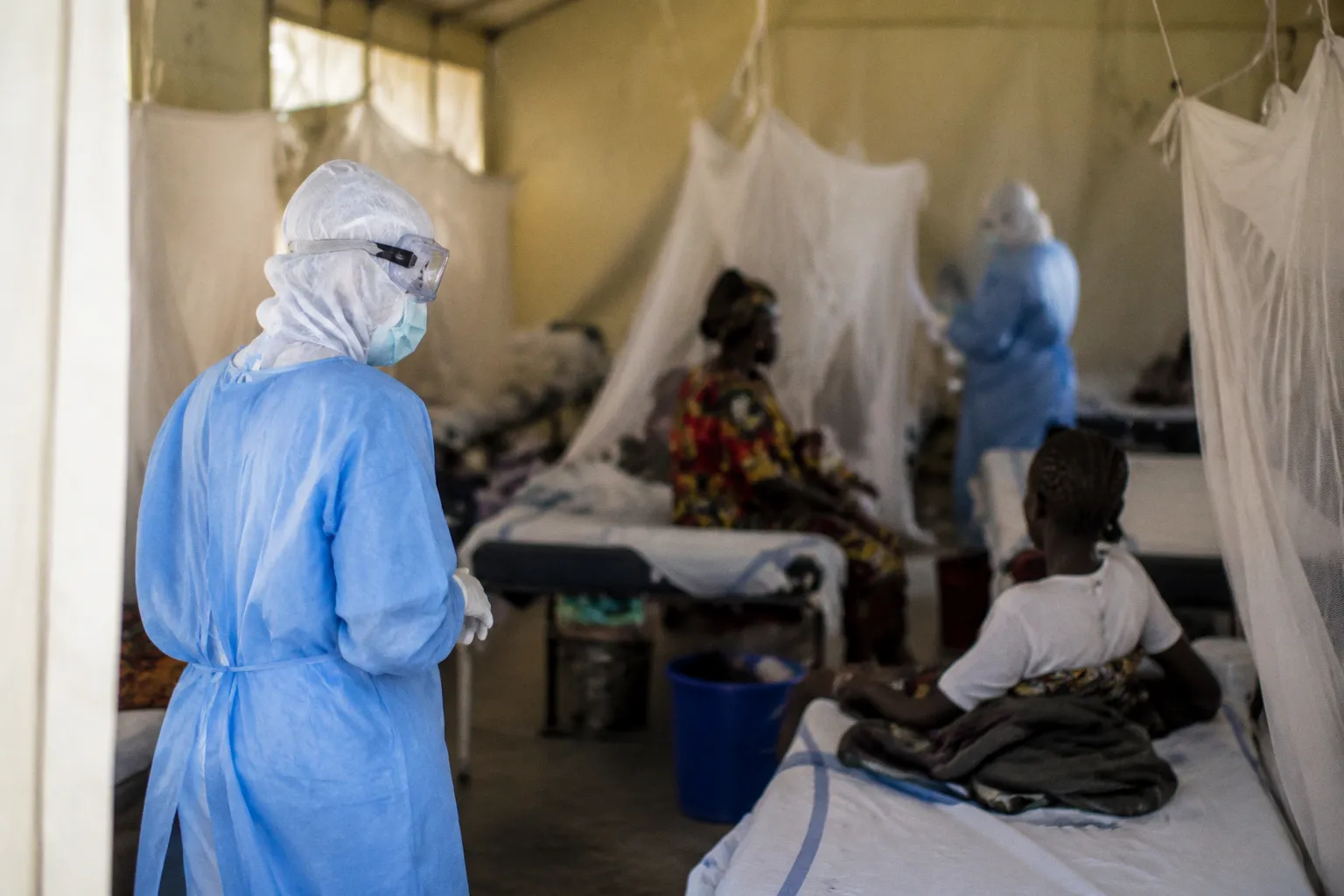
# Ebola Outbreak Metrics: DRC Cases Approach 1,000 as CDC Models Regional Trajectory
Transmission Mechanism and Scale Variables
The viral transmission profile described in the briefing is direct contact-mediated, not aerosolized. Pillai explicitly noted that Ebola does not spread through the air like measles or influenza. This distinction carries biochemical weight: the absence of an airborne or foodborne route narrows the at-risk population to direct contacts of symptomatic individuals and their body fluids — a containment perimeter that is operationally definable, if difficult to enforce in high-density settings. Trials and modeling indicate the trajectory, but airborne propagation remains unsupported by the described data.
Two MMWR publications released approximately two weeks before the briefing modeled outbreak scenarios over the coming months. The model, per Pillai, reinforces the current observed trajectory and supports the conclusion that strong immediate support is required to slow transmission in DRC and prevent further regional spread. The 19 cases documented in Kampala serve as an empirical indicator that border health containment is a measurable variable in the regional spread coefficient.
Operational Response and Data Gaps
CDC's stated intervention framework targets several quantifiable metrics: case identification latency, patient isolation protocol efficacy, healthcare worker exposure rates, and community-level information reach. Operational pillars include case finding, contact tracing, laboratory testing, infection prevention and control, border health strengthening, and community outreach. Pillai's stated goals are to find cases faster, isolate patients safely, protect healthcare workers, and ensure communities receive clear risk-reduction information.
The briefing transcript, however, does not provide several parameters required for rigorous clinical assessment:
- Case fatality ratios for the current outbreak
- Genomic identification of the circulating ebolavirus species
- Vaccination coverage figures for the 31 affected health zones
- Confidence intervals for the modeled projections
Without these data points, statistical significance of the CDC's projections — while directionally consistent with observed counts — remains incompletely specified. The clinical community cannot independently verify the severity index from the public briefing alone.
What to Monitor and Adjacent Context
For audiences tracking this outbreak, the proximate data points to monitor are: (1) case count progression in Kampala as a regional containment proxy, (2) publication of additional MMWR modeling with confidence intervals, and (3) any genomic surveillance identifying the specific ebolavirus species responsible. Parallel developments in clinical infectious disease research — including an NIH-reported AI tool aimed at accelerating antibiotic development, and recent findings indicating that cohabiting individuals share approximately a quarter of their oral microbial communities — situate this outbreak within a broader research landscape, though the Ebola transmission mechanism remains distinct from typical microbial-sharing dynamics reported in cohabitation studies.
Verdict: data suggests a critical-threshold outbreak requiring immediate containment, with transmission confined to direct contact with body fluids. For non-endemic-region practitioners and nutrition audiences, the airborne and foodborne routes are not supported by the current briefing. Monitor Kampala case counts, forthcoming MMWR data, and genomic strain identification for trajectory validation. Statistical claims from the CDC should be treated as directional pending the release of confidence-interval data.