Start a kitchen countertop compost bin in five steps
A countertop compost bin operates on a controlled application of aerobic decomposition scaled to kitchen dimensions.
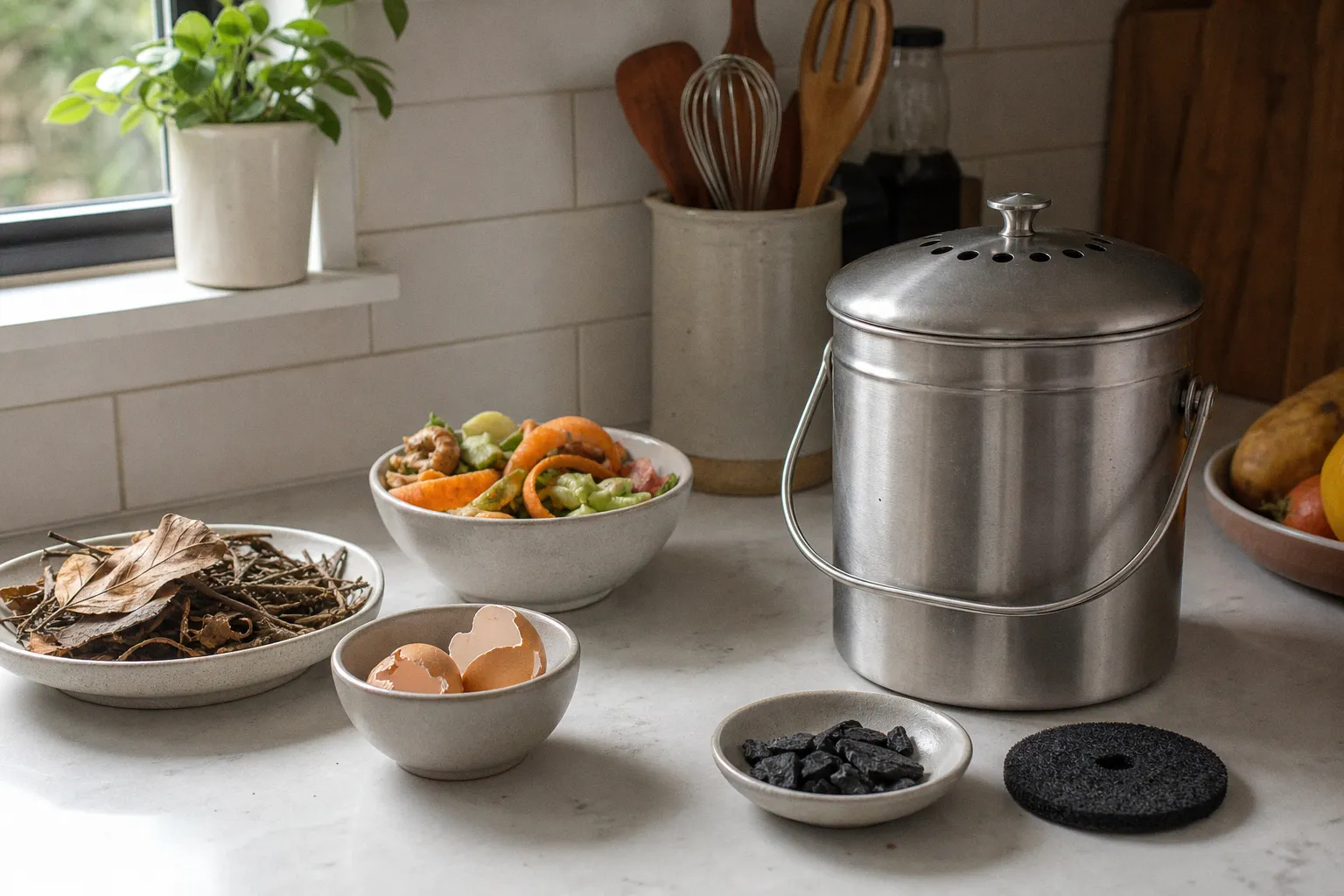
How to Start a Kitchen Countertop Compost Bin in Five Steps
The Biochemistry of Confined Decomposition
These constraints produce a fundamentally different biochemical environment. Countertop systems function primarily as collection and pre-conditioning stages rather than complete decomposition units. The objective is not humus production within the bin itself, but the stabilization of organic input: suppression of anaerobic fermentation, control of volatile organic compounds responsible for odor, and maintenance of a moisture profile conducive to downstream processing.
A properly configured countertop bin diverts a meaningful portion of household organic waste from landfill-bound streams, where anaerobic conditions generate methane at yields substantially higher than the carbon dioxide output of aerobic systems. The magnitude of that diversion depends on variables entirely external to the bin itself: how many people live in the household, what they eat, how much food they discard, and whether they maintain the system consistently. A single-person household cooking primarily from whole ingredients will produce a different volume of eligible scraps than a family of five relying on prepared meals. The bin accommodates both, but the aggregate impact follows the operator, not the vessel.
A countertop compost bin is not a composting system. It is a collection and pre-conditioning vessel that defers terminal decomposition to a secondary stage.
Step 1: Selecting the Right Vessel
Material Composition
The substrate of the container directly influences the chemistry of the contained environment. Reactive materials, including untreated wood, low-grade plastics with off-gassing potential, or porous ceramics with unstable glazes, can leach compounds into the feedstock or absorb moisture in ways that promote localized anaerobic pockets. Standard environmental health practice favors non-reactive materials such as stainless steel or high-fired ceramic. These substrates neither contribute nor absorb compounds during the collection phase, allowing microbial dynamics to proceed without exogenous interference.
| Parameter | Stainless Steel | Ceramic (High-Fired) | Low-Grade Plastic |
|---|---|---|---|
| Reactivity with acidic food waste | Negligible | Negligible | Variable |
| Odor absorption | None | Minimal | Moderate |
| Cleaning compatibility | Dishwasher-safe | Hand-wash typically | Dishwasher-variable |
| Structural lifespan | High | High | Moderate |
| Risk of compound off-gassing | None | None | Low to moderate |
Stainless steel bins tend to perform well across all parameters but carry a higher upfront cost. Ceramic options match the chemical inertness of steel, though their fragility and hand-wash requirements introduce practical friction for operators who value low-maintenance workflows. Plastic bins are widely available and inexpensive, but the variable reactivity of polymer formulations means that quality control becomes the consumer's burden. If selecting plastic, seek bins rated food-safe by recognized certification bodies, and replace them at the first sign of surface degradation, clouding, or persistent odor retention after washing.
Charcoal Filtration
The lid assembly warrants separate consideration. A standard industry feature is a charcoal filter, typically activated carbon housed in a permeable cartridge, positioned in the airflow path between the bin interior and ambient kitchen air. The mechanism is direct: volatile organic acids, ammonia, and sulfur compounds generated during early-stage decomposition pass through the carbon matrix, where adsorption neutralizes a substantial fraction of odoriferous molecules before atmospheric release.
Filter replacement intervals are brand-dependent, and standardized lifespan data across commercial products is not comprehensively published. Empirical observation suggests that under typical household loading conditions of approximately 0.5 to 1 kilogram of scraps per day, a carbon filter reaches saturation within 30 to 60 days. Scheduled replacement is more reliable than odor-based judgment, as individual odor detection thresholds vary considerably. A filter that appears functional to one operator may already be bypassing odor compounds detectable to a more sensitive household member. Mark replacement dates on a calendar or set a recurring reminder; the alternative, waiting until the kitchen smells, means the filter failed weeks earlier.
Step 2: Defining the Input
Biochemical compatibility of inputs determines whether the collection bin functions as intended or devolves into an odor source and pest attractant. The classification is binary at the countertop stage: materials either support the controlled, aerobic pre-conditioning process or they undermine it. There is no middle category where small quantities of excluded inputs become acceptable, because the confined volume amplifies the biochemical impact of every addition.
Permitted Inputs
Data supports inclusion of the following categories:
- Fruit and vegetable scraps, including peels, cores, rinds, and trimmings. These are predominantly cellulosic with moderate nitrogen content, producing mild acidification during initial hydrolysis. The diversity of plant-derived inputs also introduces a broader spectrum of micronutrients to the downstream compost.
- Coffee grounds and unbleached paper filters. Spent grounds are nitrogen-rich and structurally fine-grained, which accelerates microbial colonization. The paper filter contributes a small but useful carbon fraction.
- Tea leaves and loose tea. Similar in biochemical behavior to coffee grounds, though with lower nitrogen density per unit mass. Remove staples from tea bags before adding.
- Eggshells, rinsed and crushed. Crushed shells contribute calcium carbonate, which buffers pH in acidic feedstock and accelerates mineralization in the downstream pile. Whole shells decompose slowly; crushing to a coarse powder significantly increases surface area and reaction rate.
- Herbaceous garden trimmings in small volumes. Fresh green clippings from herbs, lettuce, or similar soft-stemmed plants are compatible in moderation. Woody stems and lignified trimmings belong in a dedicated outdoor pile, not a countertop bin.
Excluded Inputs
The following categories should be excluded from countertop systems intended for downstream home composting:
- Meat, fish, and poultry. Lipid and protein concentrations support rapid colonization by putrefactive anaerobes, generating volatile amines and sulfur compounds. Even small quantities produce disproportionate odor in a confined space.
- Dairy products. Casein and lactose fractions ferment unpredictably and attract Drosophila species. The volatile profile of dairy fermentation in warm indoor conditions is distinct and persistent.
- Oils and fats. Hydrophobic films impede oxygen diffusion within the feedstock matrix, creating localized anaerobic zones even when the bulk mixture appears adequately aerated.
- Cooked grains and processed foods. Salt concentrations in prepared foods inhibit mesophilic bacterial activity, while added sugars and preservatives introduce variables outside the scope of controlled pre-conditioning.
- Citrus in volume. Limonene and acidic pH from citrus rinds disrupt fungal communities essential to lignin degradation downstream. A few lemon slices are negligible; a bin filled with orange peels is a different matter.
A countertop bin is not equipped to process these inputs. Inclusion increases odor compound output by an order of magnitude and elevates pest attraction probability.
| Input Class | Examples | Biochemical Behavior | Inclusion Verdict |
|---|---|---|---|
| Cellulosic greens | Vegetable peels, fruit scraps | Rapid hydrolysis, mild acidification | Include |
| Carbon-rich browns | Dried leaves, shredded paper | Slow microbial colonization, moisture buffering | Include |
| Animal proteins | Meat, dairy, eggs | Putrefaction, ammonia, sulfide release | Exclude |
| Lipids | Cooking oils, butter | Anaerobic film formation, rancidity | Exclude |
| Highly acidic plant matter | Citrus in volume | Fungal suppression, pH depression | Limit |
Step 3: Mastering the Mix
The Stoichiometric Target
Microbial metabolism requires both a carbon source, necessary for cellular energy and structure, and a nitrogen source, required for protein synthesis and reproduction. The idealized carbon-to-nitrogen ratio for efficient aerobic decomposition lies between 25:1 and 35:1, with a target midpoint near 30:1.
Deviation in either direction produces distinct biochemical consequences:
| C:N Ratio | Microbial State | Observable Outcome |
|---|---|---|
| Above 40:1 | Nitrogen limitation, slowed metabolism | Dry, undecomposed feedstock; no odor but no progress |
| 25:1 to 35:1 | Balanced metabolism | Steady temperature rise, mild earthy odor |
| Below 20:1 | Ammonia release from protein breakdown | Sharp ammonia odor, acidic and slimy feedstock |
A countertop bin will never generate the thermophilic temperatures that drive rapid decomposition in an outdoor pile. That is by design; the bin's function is pre-conditioning, not terminal processing. The C:N ratio at the countertop stage therefore matters less for decomposition speed and more for odor prevention and downstream compatibility. Feedstock that enters the outdoor pile or municipal collection stream already balanced within the target range requires less intervention at the secondary stage.
Application in a Countertop Context
In a confined bin, this ratio cannot be controlled with the precision available in an outdoor pile. The practical approach is therefore categorical rather than stoichiometric: maintain visual estimates of browns (carbon-rich: dried leaves, shredded paper, torn cardboard) and greens (nitrogen-rich: fresh vegetable scraps, coffee grounds). Trials indicate that alternating layers, or maintaining a 1:1 volumetric ratio of browns to greens in a small auxiliary vessel adjacent to the bin and transferring them together, produces more stable downstream conditions than greens alone.
The 1:1 volumetric guideline is a heuristic, not a law. Household dietary composition shifts the baseline input profile: a household consuming primarily vegetables and legumes produces nitrogen-dominant scraps and requires more aggressive supplementation with browns. A household discarding large volumes of bread crusts, cereal remnants, or dried grain products may already lean carbon-heavy and need less additional browns. Observe the feedstock after 24 hours. A mild, earthy or faintly sweet odor indicates approximate balance. A sharp, acrid smell signals nitrogen excess; add browns and mix.
Common Errors in Ratio Management
- Layering exclusively with greens and neglecting browns. This is the most frequent operator error. The result is a nitrogen-saturated, moisture-heavy environment that smells within hours and attracts fruit flies within days.
- Adding browns in quantities sufficient to smother greens rather than buffer them. An excess of dry material creates air pockets that desiccate the greens and slow microbial colonization without producing the intended buffering effect. The goal is integration, not burial.
- Failing to crush or tear browns, which delays surface area exposure to microbial colonization. A whole sheet of newspaper placed atop vegetable scraps provides almost no buffering function. Shred or tear it into strips and mix it in.
Step 4: Maintenance Protocols
Aeration
Oxygen availability governs whether decomposition proceeds aerobically or collapses into fermentation. A countertop bin provides minimal passive aeration; most designs rely on lid-level airflow through the charcoal filter and occasional manual mixing. The protocol is simple but non-negotiable:
- Stir the contents once daily with a dedicated utensil. A wooden spoon or silicone spatula works; metal utensils may scratch coated surfaces.
- Avoid compaction; fluff rather than press. Compacted feedstock expels air from interstitial spaces, creating anaerobic microenvironments even in an otherwise well-mixed bin.
- Confirm aeration holes or any removable base remain unobstructed. Some bin designs include drainage channels or raised bases; accumulated residue can block these features within weeks.
Bins left undisturbed beyond 48 hours develop anaerobic microenvironments within the lower feedstock layers, irrespective of lid design. The daily stir takes approximately 15 seconds. Skipping it converts a functional pre-conditioning vessel into a sealed fermentation chamber.
Moisture Control
Countertop bins typically operate at 40 to 60 percent moisture by mass. Visible pooling at the base signals oversaturation, which compresses air spaces and accelerates anaerobic conditions. Remediation steps:
- Add a layer of dry browns to absorb excess liquid. Shredded cardboard or crumpled newspaper placed at the base of the bin before each new addition of greens provides continuous moisture buffering.
- Drain any leachate into the sink rather than allowing prolonged contact with the bin floor. Liquid accumulation beyond 24 hours promotes biofilm formation on the bin interior.
- Avoid adding liquids, including broths, milk, and oils, directly into the bin. Even small volumes of free liquid disrupt the moisture equilibrium faster than the feedstock matrix can compensate.
Fruit Fly Mitigation
Drosophila melanogaster and related species respond to fermentation volatiles, particularly acetic acid and ethanol. In warm indoor environments, fruit fly populations can establish within 48 to 72 hours of sustained volatile emission. Preventive protocols include:
- Emptying the bin every 2 to 3 days, per standard environmental health recommendations. Extended accumulation intervals are the primary risk factor for insect attraction.
- Sealing each addition of scraps beneath a layer of browns. The physical barrier reduces volatile release between stirring events.
- Cleaning the bin interior with a dilute vinegar solution during emptying. Residual organic films on bin walls continue to produce volatiles even after the feedstock is removed.
- Confirming the charcoal filter seal remains intact, since a compromised seal releases unfiltered volatiles that attract insects from a distance.
Procedural Failure Modes
Observed failure modes in residential countertop bins:
- Sealing liquid-rich scraps without absorbent buffer. Tomatoes, melon rinds, and similar high-moisture inputs placed directly into a dry bin create pooling within hours.
- Allowing dairy residues to remain on bin walls between cycles. Even trace dairy contamination from a previous cycle can sustain fruit fly breeding in warm weather.
- Operating bins constructed of breathable fabric without internal rigid structure. Fabric bins marketed as "compost bags" offer no aeration control and produce odor permeation through the textile itself.
- Allowing intervals exceeding three days between emptying events. At this threshold, the probability of anaerobic establishment, odor generation, and insect attraction rises sharply regardless of other maintenance variables.
Step 5: The Transition Phase
Functional Boundary of the Countertop Bin
The biochemistry within the countertop vessel does not reach terminal decomposition. After two to three days of accumulation, during which partial hydrolysis, acidification, and initial colonization by mesophilic bacteria occur, contents require transfer to a system with adequate thermal mass, surface area, and aeration for complete stabilization. The countertop bin is upstream infrastructure; leaving feedstock in it beyond the functional window converts a pre-conditioning vessel into a stagnation chamber.
Outdoor Pile Transfer
For households with outdoor space:
- Construct the receiving pile to a depth of at least 60 cm to support thermophilic temperatures of 50 to 65°C in the core. Shallow piles lack the thermal mass to sustain the microbial communities that perform terminal decomposition.
- Bury countertop scraps within the pile interior rather than surface-applying them. Burial deters scavengers and places the fresh feedstock in direct contact with the active microbial zone of the existing pile.
- Maintain a browns layer above and below the deposited greens to balance moisture and odor. The layered structure also prevents the fresh scraps from compacting into a dense, oxygen-depleted mass.
Municipal Organic Collection
For households without outdoor space:
- Confirm the local waste management provider accepts pre-collected food scraps. Municipal organic collection programs vary in accepted input categories; some exclude cooked food while others accept it.
- Transfer bin contents into the designated curbside bin, typically lined with a compostable bag certified to the relevant standard in your jurisdiction.
- Rinse the countertop bin at the transfer point to reset odor profile and microbial load. A clean bin with fresh filter media begins each cycle without residual volatile carryover.
Households maintaining a two-to-three-day emptying cycle and adhering to input exclusions achieve diversion rates approaching 100 percent of eligible food scraps from landfill-bound streams. The countertop bin captures what the household produces; the discipline of the operator determines what percentage of that production enters the composting pathway rather than the waste stream.
Verification of System Function
Operators seeking to verify proper function can apply a five-point check:
1. Absence of sharp odor compounds. A healthy bin smells faintly earthy or neutral. Ammonia, sulfur, or acetic acid notes indicate a ratio or aeration failure.
2. Absence of moisture pooling. The feedstock should feel damp, not wet. Free liquid at the base signals oversaturation.
3. Intact filter seal and replacement currency. A degraded seal bypasses the carbon filter entirely. Check the gasket and cartridge seating at each emptying.
4. Emptying intervals at or below 72 hours. Beyond this window, the system degrades regardless of other variables.
5. Adherence to input exclusions. A single inclusion of meat, dairy, or oil can disrupt the bin's biochemical balance for an entire cycle.
Failure on any single parameter typically indicates the upstream cause and the corrective protocol required. No specialized testing is necessary; these are observable conditions.
Verdict
The efficacy of a kitchen countertop compost bin depends less on the device itself than on the discipline applied to its use. The vessel is a passive collection apparatus; the variables that determine success, including carbon-to-nitrogen balance, oxygen availability, moisture range, exclusion of incompatible inputs, and emptying frequency, are operator-controlled. The marginal contribution to landfill diversion is real but bounded. A single household operating a properly maintained bin can divert a significant volume of organic matter from landfill-bound streams, though the exact figure varies substantially with household size, dietary composition, and cooking frequency. A two-person household preparing most meals from scratch may accumulate several kilograms of eligible scraps per week; a larger household with higher food preparation volume will produce considerably more. The bin scales to either scenario, but the aggregate impact follows the operator's habits, not the vessel's capacity.
The molecular case for the system is straightforward. Aerobic decomposition in a downstream facility produces carbon dioxide, water, and stable humic compounds. The same feedstock, when landfilled, generates methane, a greenhouse gas with a 25- to 80-fold greater atmospheric warming potential than carbon dioxide over standard assessment horizons. The countertop bin does not perform this conversion itself, but it enables it by preventing the alternative pathway.
For readers prepared to maintain the discipline, the system is effective within its defined scope. For readers expecting the bin itself to produce usable compost, the expectation is biochemically unsound. The vessel's role is upstream of the actual composting process: collection, pre-conditioning, and prevention of methane-generating anaerobic decomposition in landfill conditions. Within these constraints, the data supports the system's inclusion in a household waste management protocol.
The broader operational principle of data-driven routines extends beyond kitchen waste. Households already engaged in disciplined tracking of recurring metrics across unrelated domains, such as dailygg.com for tournament schedules and standings, will recognize the structural pattern: parameterize the system, schedule the interventions, log the deviations, and adjust within defined bounds. The kitchen bin is no exception.