USP Verification: What It Means for Dietary Supplements
The bottle on the shelf promises 1,000 milligrams of fish oil, 300 of them EPA and DHA. The label speaks in tidy numbers, but behind that clean arithmetic lies a question every thoughtful consumer eventually asks: are these claims actually true?
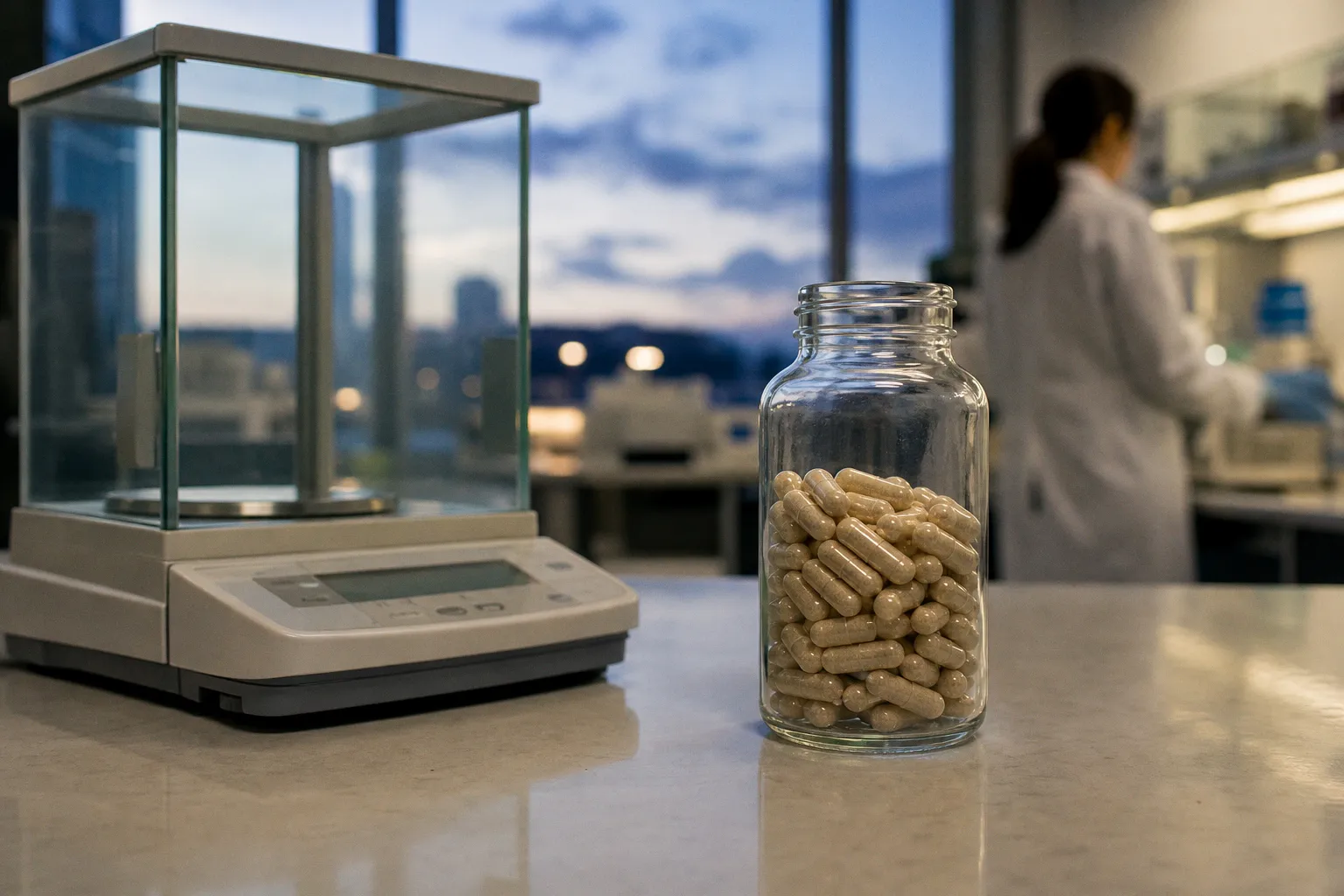
I've spent years tracing the long journey food takes from soil and sea to supplement capsule, and I can tell you that the distance between a stated milligram and an actual one can be surprisingly wide. The USP Verified mark is one of the most rigorous answers to that gap currently available in the United States, and understanding what it actually guarantees - and what it deliberately does not - is essential for anyone who treats supplements as part of a thoughtful, well-fed life.
The Mechanics of USP Verification: Beyond the Label
The USP Dietary Supplement Verification program is, at its heart, an independent audit. It is run by the U.S. Pharmacopeia, a nonprofit scientific organization founded in 1820 that sets public standards for medicines, food ingredients, and dietary supplements in the United States. When you see the familiar USP Verified mark on a bottle, it means the manufacturer chose to submit that specific product - not just the brand, but the exact formulation in that exact bottle - to a multi-layered testing and inspection process.
Here is how the process unfolds, in broad strokes, when a company decides to participate:
1. Application and documentation review. The manufacturer submits detailed information about the product: its full ingredient list, the declared potency of each component, the source materials, the manufacturing facility, and the quality control procedures already in place. USP scientists review this dossier to determine whether the product is even eligible for verification.
2. Independent laboratory testing of the finished product. USP sends the product to independent laboratories for analysis. These labs test whether the ingredients listed on the label are actually present, and in the declared potency. If the label claims 500 mg of vitamin C, the lab measures to confirm that 500 mg is really there - not 380, not 620, not "approximately."
3. Contaminant screening. The product is tested for harmful substances at levels that exceed established safety thresholds, including heavy metals and microbial impurities.
4. Manufacturing facility audit. Inspectors visit the production site to confirm the supplement is being made under sanitary conditions in accordance with FDA current Good Manufacturing Practices (cGMP) and USP's own quality standards.
5. Ongoing market surveillance. Once a product earns the mark, USP continues to purchase it from retail shelves and re-test it. The verification is not a one-time event; it is a continuing obligation.
The USP Verified mark is a third-party promise that the label's arithmetic is real - not a guarantee that the supplement will cure what ails you.
This last point matters more than people often realize. The verification is voluntary, meaning the manufacturer chooses to pursue it and pays for the privilege. That alone sets it apart from the regulatory baseline in the United States, where the burden of pre-market quality testing still rests largely on manufacturers themselves.
Ensuring Ingredient Integrity and Potency Standards
The first and most straightforward thing the USP Verified mark confirms is ingredient integrity - that what you read on the label is what lives inside the capsule, the tablet, or the softgel. This sounds elementary, but the supplement industry has long wrestled with what researchers gently call "label drift": the slow creep between declared and actual content, sometimes from raw material variability, sometimes from shortcuts in manufacturing, and occasionally from outright error.
For a product to earn the mark, USP requires that the ingredients listed on the label be present in the declared potency and amount. There is some tolerance built into the analytical methods - no measurement is perfectly precise - but the program is designed so that what you see on the front of the bottle is what an independent chemist would find if they opened it in a lab.
I think about this often in the context of botanical extracts, where the active compounds can vary widely depending on when a plant was harvested, how it was dried, and what part of it was used. A curcumin extract, for instance, may be standardized to 95 percent curcuminoids in theory, but actual batches have been shown to swing by tens of percentage points when tested. USP's ingredient verification acts as a check on that natural variability - a way of saying that this particular bottle, in this particular run, met the claim. The same standard applies across vitamins, minerals, probiotics, fish oils, melatonin, CoQ10, and the wide range of other categories the program covers.
Rigorous Screening for Heavy Metals and Microbial Contaminants
Perhaps the most important work the verification program does - and the part that often gets lost in casual conversation about "quality" - is contaminant screening. Dietary supplements are concentrated forms of food and botanical material, which means they can also concentrate any contaminants that came along for the ride.
USP tests verified products against established safety limits for several categories of unwanted guests:
- Heavy metals: lead, mercury, arsenic, and cadmium are each measured, and products must fall below specified thresholds to earn the mark. These elements accumulate in the body over time and are particularly concerning for supplements taken daily over months or years.
- Pesticide residues: certain agricultural chemicals are screened for, particularly in plant-based ingredients where sourcing matters.
- Microbial impurities: bacteria, yeast, and mold are counted, and the product must fall within limits USP considers safe for human consumption.
The standard USP applies is zero tolerance above established safety limits. That is not the same as zero presence - trace amounts of heavy metals exist in the natural environment and can show up in any agricultural product - but it is a firm ceiling, and the verification will not be granted if a product crosses it.
A supplement can be perfectly potent and still be a poor choice if its raw materials were grown in contaminated soil or processed in unsanitary conditions.
For someone taking a daily multivitamin or a daily omega-3, this screening matters enormously. The dose makes the poison, but the dose accumulates over years. A product that passes USP's contaminant screen offers a meaningful safeguard against the slow, invisible buildup of substances you never intended to ingest.
Manufacturing Compliance and Ongoing Market Surveillance
Verification is not a single moment; it is a relationship between the manufacturer, USP, and the consumer that continues for as long as the mark appears on the label. Two elements keep that relationship honest.
First, the manufacturing audit. USP verifies that the facility producing the supplement follows the FDA's current Good Manufacturing Practices - the federal baseline for sanitary, controlled production of dietary supplements - and also checks the facility against USP's own quality systems, which often exceed that floor. The audit examines everything from how raw materials are received and stored to how equipment is cleaned, how workers are trained, and how finished products are tested before release.
Second, ongoing market surveillance. Once a product has earned the mark, USP does not simply walk away. The organization continues to purchase the product from retail outlets - not from the manufacturer, but from the same shelves where you shop - and re-tests it. This is the part of the program I find quietly elegant: it closes the loop between the factory floor and the shopping cart, ensuring that what passed testing last year is still what you would find in the bottle today.
If a product fails to maintain these standards, the mark can be revoked. The list of currently verified products is publicly available, and USP updates it as formulations change or as products fall out of compliance. This ongoing surveillance is part of why I treat the mark with more confidence than a one-time lab certificate - the verification is alive, not stamped and forgotten.
Understanding the Scope: What the USP Mark Does Not Guarantee
Here is where a careful reader needs to slow down. The USP Verified mark is a quality assurance mark. It is not, and has never claimed to be, a mark of therapeutic effectiveness. Understanding that distinction is the difference between using the mark wisely and being misled by it.
| The USP Verified mark confirms | The USP Verified mark does not confirm |
|---|---|
| Declared ingredients are present in declared potency | Effectiveness for treating, curing, or preventing any disease |
| Harmful contaminants fall below established safety thresholds | Endorsement of manufacturer health claims |
| Manufacturing follows FDA cGMP and USP quality systems | That competing third-party programs are inferior |
| The product is re-tested through ongoing market surveillance | That the product is the right choice for your personal health needs |
That last point in the right-hand column deserves a moment of attention, because the supplement world is full of excellent manufacturers who simply choose different third-party certifiers - NSF International, Informed Choice, ConsumerLab.com, and others - or who maintain rigorous internal testing protocols that may be every bit as demanding. The absence of the USP mark is not, by itself, evidence of a problem. It is the absence of one specific verification pathway, and reading too much into that absence can lead you away from perfectly sound products.
It also bears saying that USP verification is voluntary and manufacturer-funded. The manufacturer applies for the program and pays for the testing and auditing that leads to the mark. This is standard practice for most third-party certifications, but it does mean the mark tends to appear most often on products from companies large enough to absorb the cost - which can skew the perception that the mark itself is a kind of premium label, when in reality it is a quality floor applied across many price points.
Practical Takeaways for the Discerning Consumer
So what does all of this mean when you stand in the supplement aisle, bottle in hand? A few things, in plain order:
- The USP Verified mark is one of the most rigorous third-party quality systems available for dietary supplements in the United States. It checks ingredients, potency, contaminants, and manufacturing conditions, and it keeps checking through ongoing surveillance.
- It tells you what is in the bottle, not what the bottle will do for you. The mark confirms quality, not therapeutic effect. Those are separate questions.
- Its absence does not automatically condemn a product. Many reputable brands pursue other certifications or maintain strong internal standards. The mark is a meaningful signal, not the only signal worth listening for.
- It is worth seeking out, especially for supplements taken daily. For a daily multivitamin, a daily fish oil, a daily probiotic - products whose cumulative exposure compounds over time - the contaminant screening alone is a meaningful safeguard.
In the end, the USP Verified mark is what good food systems have always aspired to: a transparent accounting between promise and delivery. It does not solve every question a thoughtful consumer might have about a supplement, but it answers the most foundational one - whether what the label says is what the bottle actually holds. For that alone, it earns its quiet place on the shelf.