Alternative proteins: how to choose the healthiest option
The market for alternative proteins has fractured into three distinct biochemical categories—plant-based isolates and whole-food matrices, fermentation-derived mycoprotein, and cultivated cellular…
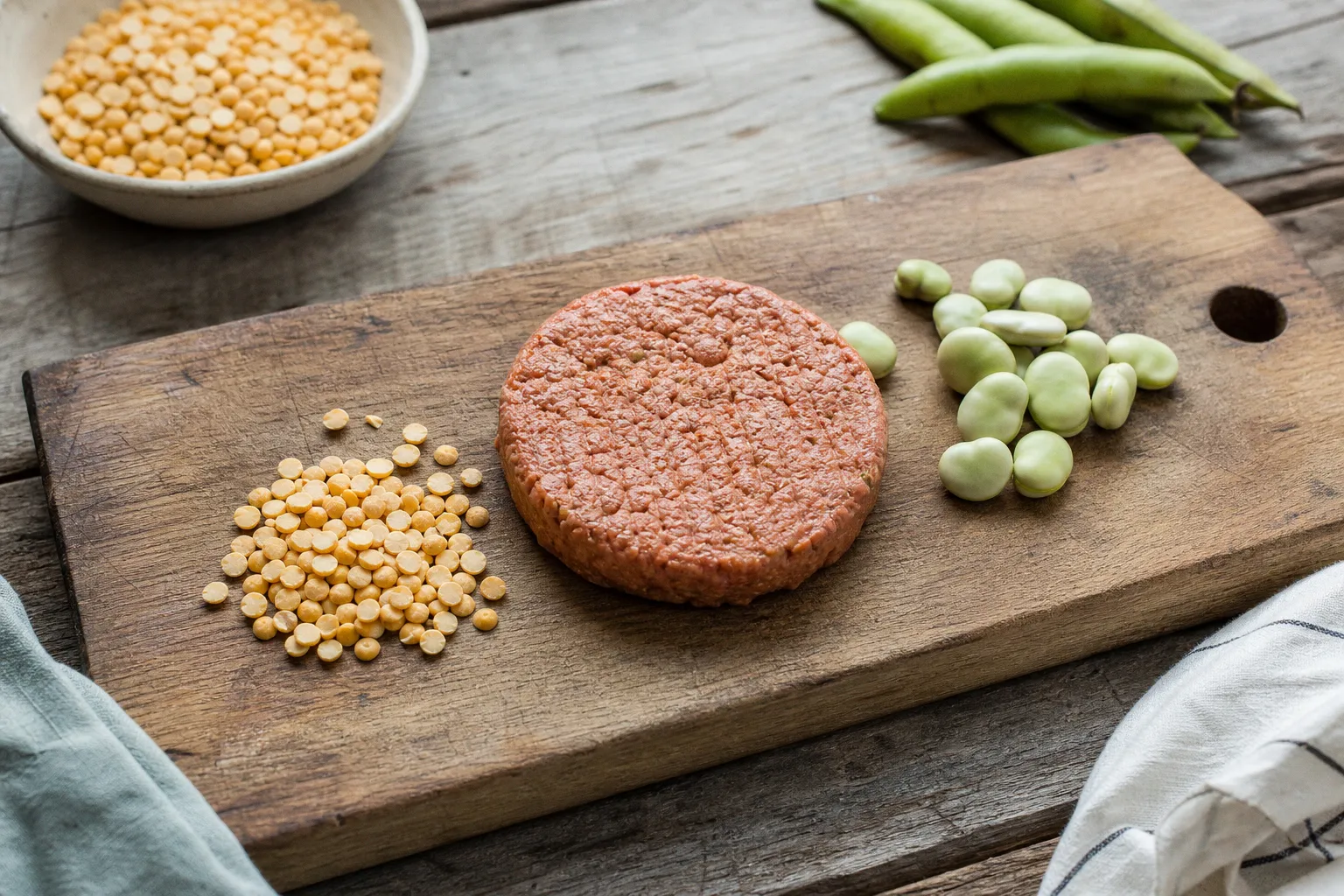
The market for alternative proteins has fractured into three distinct biochemical categories—plant-based isolates and whole-food matrices, fermentation-derived mycoprotein, and cultivated cellular agriculture—each presenting a fundamentally different nutrient matrix, processing load, and environmental profile. The hypothesis that a "plant-based" label automatically translates to "nutritionally superior" fails under biochemical scrutiny once the variable of ultra-processing is introduced. Selecting the optimal protein source requires evaluating three independent parameters: protein quality (assessed via PDCAAS or DIAAS scoring systems), the density of bioavailable micronutrients and cofactors, and the absence of compensatory additives such as sodium and saturated fats. This guide establishes the biochemical criteria necessary to make that selection based on clinical evidence rather than product positioning.
The Environmental Calculus: From Land Use to Emissions
The environmental footprint of protein production varies by orders of magnitude depending on the source organism and the cultivation methodology employed. Data published in peer-reviewed journals indicates that plant-based meat alternatives typically generate between 70% and 90% fewer greenhouse gas emissions than conventional beef production. Cultivated meat—produced through cellular agriculture rather than whole-animal husbandry—has demonstrated a potential reduction in land use of up to 99% and water consumption between 82% and 96% when compared to conventional bovine systems.
The biochemical mechanism behind these reductions centers on metabolic efficiency and trophic loss. Ruminant animals lose approximately 80% of the caloric and nitrogenous value of their feed to digestive inefficiencies, enteric methane emissions, and metabolic heat before producing edible tissue. Legumes and pulses, by contrast, fix atmospheric nitrogen directly through root nodule symbiosis with Rhizobium species, bypassing synthetic fertilizer inputs entirely. Cellular cultivation bypasses the trophic loss by maintaining differentiated cells in bioreactor media optimized for direct protein synthesis, removing the intermediate animal metabolism from the production chain.
| Protein Source | GHG Emissions vs Beef | Land Use | Water Use | Processing Intensity |
|---|---|---|---|---|
| Conventional Beef | Baseline (100%) | Very High | Very High | Low |
| Plant-Based Meat Analog | 10–30% | Moderate | Moderate | High |
| Lentils/Beans (whole) | 1–5% | Low | Low | Minimal |
| Mycoprotein (fermented) | ~10–20% | Low | Moderate | Moderate |
| Cultivated Meat | <10% | Minimal | Minimal | Very High |
The data demonstrates that environmental benefit does not correlate linearly with nutritional benefit—a distinction critical to the remainder of this analysis.
Decoding Protein Quality: PDCAAS and Amino Acid Profiles
Protein adequacy in human nutrition cannot be assessed by gross intake alone; bioavailability and amino acid completeness determine physiological utility. The Protein Digestibility Corrected Amino Acid Score (PDCAAS) is the FAO-standardized metric, scaled from 0.0 to 1.0, where 1.0 represents equivalence to whole egg or whey in human utilization. The Digestible Indispensable Amino Acid Score (DIAAS) provides a more granular alternative, measuring ileal digestibility of individual amino acids rather than total protein. Soy protein isolate scores between 0.92 and 1.0 on the PDCAAS scale, establishing it as a complete protein by FAO standards. Pea protein typically scores between 0.70 and 0.85, with methionine identified as the limiting indispensable amino acid.
- Soy protein isolate: PDCAAS 0.92–1.0; complete amino acid profile; high digestibility (~95%).
- Pea protein: PDCAAS 0.70–0.85; limited in methionine; frequently combined with rice protein (which is limited in lysine) to correct mutual deficiency.
- Wheat gluten: PDCAAS ~0.25–0.50; severe lysine limitation; nutritionally inadequate as a sole protein source.
- Mycoprotein: PDCAAS ~0.91; complete amino acid profile; high fiber content provides additional metabolic benefit.
- Hemp protein: PDCAAS ~0.46–0.67; lysine and leucine limitation; lower digestibility due to fiber matrix.
- Rice protein: PDCAAS ~0.50–0.74; lysine-limited; moderate digestibility.
Complete protein status requires not merely adequate total nitrogen intake, but the presence of all nine essential amino acids in bioavailable ratios that meet human physiological requirements.
The distinction between protein isolates—chemically extracted concentrates of single plant sources—and whole-food proteins such as legumes, pulses, and seeds determines whether the consumer receives the full amino acid matrix or a chemically purified fraction. Isolates offer predictable and often superior PDCAAS scores, but sacrifice the cofactors—dietary fiber, micronutrients, polyphenols, and saponins—present in whole-food matrices. The clinical implication is that an isolate optimized for one parameter may underperform a whole-food source when total nutritional contribution is measured.
Whole Foods vs. Ultra-Processed Analogs: The Hidden Ingredients
The category label "plant-based" obscures a critical nutritional variable: processing intensity. Whole-food protein sources such as lentils, chickpeas, tofu, tempeh, and edamame deliver protein within a matrix of fiber, potassium, magnesium, folate, and phytochemicals with minimal industrial intervention. Ultra-processed meat analogs—the products occupying retail refrigerator cases under brand names such as Beyond Burger, Impossible Burger, and their market competitors—require industrial extrusion, high-moisture cooking, texturization via shear-cell technology, and flavor reconstitution to approximate the organoleptic properties of ground meat.
Clinical analysis of these analogs reveals consistent and quantifiable nutritional trade-offs:
- Sodium content: Processed plant-based meats frequently contain 300–500 mg of sodium per serving, comparable to or exceeding equivalent portion sizes of processed deli meats. Daily sodium targets (under 2,300 mg for adults) become compromised rapidly when these analogs substitute for multiple meals.
- Saturated fat: Many analogs derive textural fat from coconut oil or palm oil, introducing saturated fatty acid loads (often 3–6 g per serving) that contradict the cardiovascular rationale for switching from animal products.
- Fiber: Ultra-processing destroys native fiber structures; whole-food alternatives retain 6–8 g of dietary fiber per serving, contributing to glycemic regulation and satiety signaling.
- Bioactive compounds: Polyphenols, saponins, and isoflavones present in whole soybeans are partially degraded during isolate extraction and the thermal extrusion required for analog manufacturing.
Trials indicate that consumers substituting ultra-processed plant analogs for animal protein without addressing total sodium and saturated fat intake do not exhibit the expected improvements in cardiometabolic markers such as LDL cholesterol and blood pressure. The nutritional substitution must occur at the matrix level, not merely at the ingredient list level. Phytic acid in whole legumes, often cited as a concern, can be substantially reduced through standard preparation methods including soaking, sprouting, and cooking—processes that simultaneously enhance mineral bioavailability without industrial intervention.
The Rise of Mycoprotein and Cultivated Innovations
Fermentation-derived proteins represent a distinct biochemical category that bridges whole-food plant sources and cellular agriculture. Mycoprotein, produced through continuous aerobic fermentation of the filamentous fungus Fusarium venenatum, has been commercially available in European and selected North American markets since the 1980s. The production process involves feeding the fungus a carbohydrate substrate (typically glucose derived from corn or wheat), harvesting the biomass via centrifugation, and applying RNA reduction processing to meet regulatory safety thresholds.
Nutritionally, mycoprotein contains a complete amino acid profile scoring approximately 0.91 on the PDCAAS scale and delivers 13 g of protein and 6 g of dietary fiber per 100 g serving—nutritional density that exceeds most plant-based isolates on a per-gram basis. The fiber component consists primarily of β-glucan and chitin, both associated with documented cholesterol-lowering effects in clinical literature.
Cultivated meat, by contrast, remains in pre-commercial or limited-market deployment based on current evidence. The production process involves harvesting muscle stem cells (satellite cells) from a donor animal via biopsy, proliferating them in nutrient media containing fetal bovine serum or serum-free alternatives, and differentiating them into skeletal muscle and adipose tissue within bioreactors. While theoretical environmental gains are substantial, the consumer should not interpret "lab-grown" as currently accessible or affordable at scale. Production costs remain an order of magnitude above conventional meat, and regulatory approvals are limited to two markets (Singapore and the United States) for a narrow product range. Long-term health outcome data for sustained cultivated meat consumption does not yet exist in human populations.
Precision fermentation—an adjacent and arguably more immediately relevant technology—uses microbial hosts (Pichia pastoris, Saccharomyces cerevisiae, or filamentous fungi) genetically engineered to express specific animal proteins, such as casein, whey, or egg white proteins, without the animal. These proteins are isolated and used as functional ingredients in dairy and egg alternatives, providing molecular structures identical to conventional animal proteins.
Mycoprotein currently offers the highest combined nutritional density and environmental efficiency among commercially accessible alternative protein categories for the average consumer.
Navigating Nutritional Density in a Sustainable Diet
The optimal selection methodology prioritizes biochemical reality over product marketing. The reader should apply the following parameters in sequence to evaluate any alternative protein source.
1. Establish protein adequacy first: Calculate target intake (approximately 0.8 g/kg body weight for sedentary adults, 1.2–1.6 g/kg for active populations) and select the source with the highest PDCAAS score available within dietary preferences and accessibility constraints.
2. Evaluate the whole matrix: Prefer protein delivered within a whole-food matrix (legumes, tofu, tempeh, mycoprotein, fish from sustainable fisheries) over isolated fractions reconstituted into ultra-processed analogs. The cofactor nutrients present in whole matrices contribute to total nutritional adequacy.
3. Audit additives and processing aids: Examine sodium content (target under 400 mg per serving for primary protein components) and saturated fat sources. Coconut and palm oil inclusions in plant analogs undermine the cardiovascular rationale for substitution.
4. Verify micronutrient density: Whole-food sources deliver cofactors—non-heme iron, zinc, magnesium, B-vitamins, and in some cases vitamin B12 precursors—that require fortification in many alternatives. Vegetarians and vegans consuming primarily processed analogs should verify B12, vitamin D, and omega-3 status through laboratory testing rather than assuming adequate intake.
5. Account for preparation method: Soaking, sprouting, and fermenting whole legumes and grains reduces phytic acid content and improves mineral absorption without industrial processing.
| Selection Criterion | Whole-Food Plant | Processed Analog | Mycoprotein | Cultivated Meat |
|---|---|---|---|---|
| PDCAAS Score | 0.70–0.90 | 0.80–1.0 | 0.91 | Estimated 0.90–1.0 |
| Sodium (per serving) | <50 mg | 300–500 mg | <300 mg | Variable |
| Saturated Fat | <2 g | 3–6 g | <1 g | Variable |
| Dietary Fiber | 6–8 g | 0–2 g | 6 g | 0 g |
| B12 Status | None (unless fortified) | Often fortified | Fortified | Inherent |
| Commercial Availability | Widespread | Widespread | Moderate | Limited |
The statistical verdict is unambiguous: whole-food plant proteins and fermentation-derived mycoprotein deliver superior combined nutritional density and environmental profiles compared to ultra-processed meat analogs. Cultivated meat represents a future variable with theoretical promise but insufficient deployment data for current dietary planning. The consumer selecting an alternative protein should treat "plant-based" as an incomplete descriptor requiring further qualification at the processing and ingredient level—and should anchor the final decision in biochemical evidence, amino acid completeness, and matrix composition rather than label positioning or marketing claims.