Identify the Big 6 foodborne pathogens for your safety audit
When you think about what can go wrong in a kitchen, the mind often jumps to fires, cuts, or a missed allergen on a ticket.
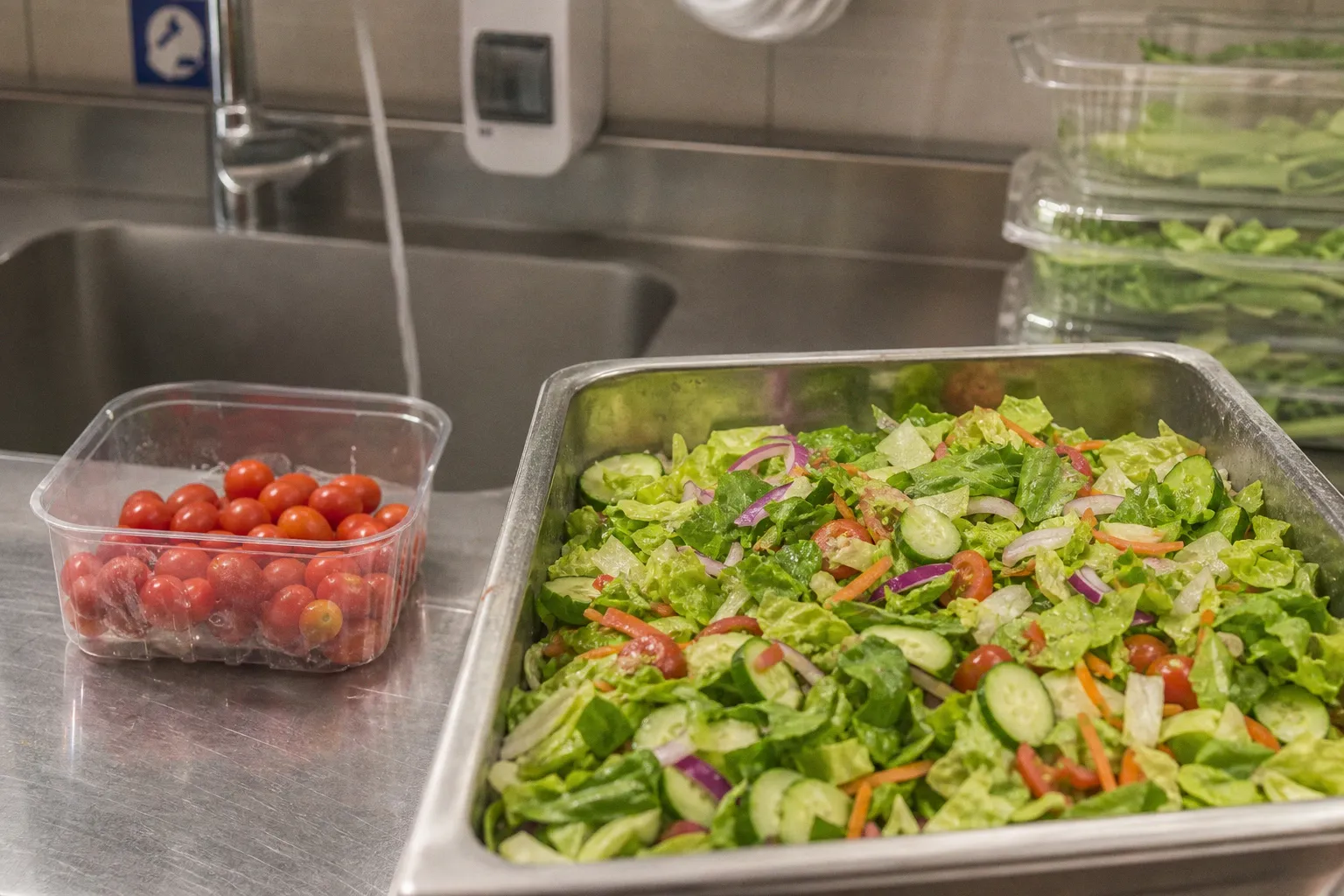
What makes these particular six so dangerous isn't just the illness they cause. It's the breathtakingly small number of cells or viral particles needed to sicken someone. We're talking about infectious doses so low that a single contaminated surface, one lapse in handwashing, or one sick employee who came in "just to finish the lunch rush" can cascade into dozens of hospitalizations. In this guide, I'll walk you through each pathogen — its biology, its route into your kitchen, and the specific obligations the 2022 FDA Food Code places on your shoulders as a manager. This is the knowledge that separates a compliant operation from a headline.
Why These Six: The Ecology of High Infectivity
The FDA didn't select these pathogens at random. The Big 6 — Norovirus, Nontyphoidal Salmonella, Salmonella Typhi, Shiga toxin-producing Escherichia coli (STEC), Shigella spp., and Hepatitis A virus — were singled out because of a shared ecological trait: they require remarkably few organisms to establish an infection in a human host. This concept, known as low infectious dose, changes the entire calculus of food safety.
Most foodborne pathogens need thousands or even millions of cells to make someone sick. Your body's defenses — stomach acid, mucus membranes, the competitive microbiome — can usually overwhelm a small invasion. But the Big 6 exploit vulnerabilities in that defense with ruthless efficiency. For Shigella and STEC, the estimated infectious dose can be as low as 10 to 100 organisms. That's not a colony you can see. It's a molecular whisper on a cutting board.
Think of your kitchen's immune system as a fortress wall. Most pathogens need a siege army to breach it. The Big 6 need only a single spy slipping through a crack. And in a busy food service environment, cracks are everywhere — the handle of a refrigerator, the rim of a glass, the tongs at a salad bar. This is why the regulatory framework treats these pathogens differently from all others. They demand exclusion, not just caution.
The Big 6 don't need a contaminated ingredient to cause an outbreak — they only need a contaminated human. That's what makes your staff the most critical control point in the entire food safety system.
Viral Contaminants: Managing Norovirus and Hepatitis A Risks
Two of the Big 6 are viruses, and they behave very differently from their bacterial counterparts. You can't cook them out in the same predictable way, and they spread through a mechanism that's alarmingly intimate: person to person, hand to mouth, surface to food.
Norovirus: The Crowd Pleaser No One Wants
Norovirus is, by a wide margin, the leading cause of foodborne illness outbreaks in the United States. It moves through ready-to-eat foods with terrifying speed — salads, sandwiches, fruit platters, anything that's handled after cooking and served without a kill step. The incubation window is brutally short: 12 to 48 hours from exposure to the first wave of nausea, vomiting, and diarrhea.
What makes Norovirus such a persistent challenge in food service is its resilience. It survives on surfaces for days. It resists many common sanitizers at standard concentrations. And it takes an astonishingly small dose — sometimes fewer than 20 viral particles — to cause illness. A food handler who vomits in a restroom and then returns to the line without proper decontamination has essentially seeded the entire service.
The field pattern I've observed again and again is this: Norovirus outbreaks don't announce themselves with a single dramatic event. They creep. One person feels slightly off, works through it, and by the next morning, twenty people who ate at the same establishment are calling in sick. The speed is deceptive because the initial symptom — a vague queasiness — doesn't always trigger alarm in someone who's accustomed to the physical demands of kitchen work.
Hepatitis A: The Slow Fuse
If Norovirus is a flash fire, Hepatitis A is a slow-burning ember — and in some ways, that makes it more dangerous to trace. The incubation period ranges from 15 to 50 days, meaning the contaminated meal is long forgotten by the time jaundice appears. An outbreak investigation has to reach back weeks, reconstructing menus and shift schedules like an archaeological dig through receipts and time cards.
Hepatitis A is transmitted through the fecal-oral route, much like Norovirus, but the liver involvement adds a layer of severity. Most healthy adults recover fully, but the illness can be prolonged and debilitating, and in rare cases — particularly for those with pre-existing liver conditions — it can be fatal. The virus is shed in stool, and infected individuals are most contagious in the two weeks before symptoms appear, which means they're handling food during the window when they feel perfectly fine.
Vaccination exists and is highly effective, but uptake among food service workers varies widely. As a manager, you can encourage it, but you can't always mandate it — that depends on your jurisdiction and your insurance. What you can mandate, and what the FDA Food Code requires, is immediate exclusion when Hepatitis A is diagnosed or suspected.
Salmonella and Shigella: The Fecal-Oral Bridge in Your Kitchen
These two genera share a transmission route that speaks to one of food safety's most uncomfortable truths: the fecal-oral pathway is alive and well in modern food service. Not because people are careless by nature, but because the biology of these organisms is specifically adapted to exploit the gaps in human hygiene behavior.
Nontyphoidal Salmonella: The Ubiquitous Challenge
Nontyphoidal Salmonella is the workhorse of foodborne illness — common, persistent, and found in an enormous range of foods from poultry and eggs to produce and even processed snacks. The infectious dose is higher than Norovirus or Shigella, typically requiring thousands of organisms, but the environmental resilience of the bacterium compensates. It survives on dry surfaces, multiplies at room temperature, and colonizes the intestinal tracts of poultry and livestock without necessarily making the animal visibly ill.
In a kitchen audit context, Salmonella risk is about cross-contamination choreography. Raw proteins move through a shared space with ready-to-eat items, and the bacterium transfers silently via cutting boards, towels, hands, and splash zones around sinks. Temperature control is your primary weapon here — Salmonella grows rapidly between 40°F and 140°F — but the Big 6 designation means that a symptomatic employee with confirmed Salmonella must be excluded from food handling entirely, regardless of glove use or hand hygiene protocols.
Salmonella Typhi: The Rare but Severe Cousin
Salmonella Typhi deserves its own entry on the Big 6 list because the disease it causes — typhoid fever — is qualitatively different from common salmonellosis. It's systemic, potentially fatal, and associated with chronic carriers who shed the organism in their stool for months or even years without symptoms. While rare in the United States, cases are linked to international travel and, occasionally, to food handlers who are chronic carriers. The regulatory response is absolute: exclusion and medical clearance required.
*Shigella*: The Hygiene Sentinel
Shigella is, in many ways, the organism that most directly reflects the state of handwashing culture in your operation. It has a staggeringly low infectious dose — as few as 10 to 100 organisms — and it travels almost exclusively through the fecal-oral route via contaminated water, unwashed hands, or food touched by an infected person. Outbreaks are strongly associated with ready-to-eat foods that receive no cooking kill step: salads, garnishes, deli items.
The clinical presentation — bacillary dysy with bloody diarrhea, fever, and abdominal cramps — is unmistakable, but the pre-symptomatic shedding period means an infected worker can contaminate food before anyone suspects illness. Shigella is the organism that makes the case, louder than any training video, for why handwashing must be a non-negotiable cultural practice rather than a poster on the wall.
| Pathogen | Type | Infectious Dose | Incubation Period | Primary Route in Food Service |
|---|---|---|---|---|
| Norovirus | Virus | Fewer than 20 particles | 12–48 hours | Infected handler touching ready-to-eat food |
| Hepatitis A | Virus | 10–100 viral particles | 15–50 days | Fecal-oral via infected handler; long trace-back window |
| Nontyphoidal Salmonella | Bacterium | 1,000–100,000 cells | 6–72 hours | Cross-contamination from raw animal products |
| Salmonella Typhi | Bacterium | Variable (chronic carrier risk) | 7–14 days | Chronic carrier handling food; travel-associated |
| Shigella spp. | Bacterium | 10–100 organisms | 1–7 days | Poor handwashing; fecal-oral transmission |
| STEC (e.g., O157:H7) | Bacterium | 10–100 organisms | 1–10 days | Undercooked ground beef; contaminated produce |
Shiga Toxin-Producing *E. coli* and the Risk of Kidney Failure
Among all the Big 6, Shiga toxin-producing E. coli — particularly the O157:H7 serotype — carries what I consider the most frightening downstream consequence: Hemolytic Uremic Syndrome (HUS), a condition that causes kidney failure and can be fatal, especially in children and the elderly. The mechanism is a grim piece of biological engineering. The Shiga toxin produced by these bacteria damages the lining of small blood vessels, particularly in the kidneys, leading to a cascade of clotting, red blood cell destruction, and organ damage.
The infectious dose for STEC is, like Shigella, disturbingly small — estimated at 10 to 100 organisms. The primary vehicle in food service is undercooked ground beef, because grinding distributes surface bacteria throughout the interior of the meat, eliminating the safety margin that exists with a whole muscle cut. But STEC outbreaks have also been traced to produce — lettuce, spinach, sprouts — contaminated at the farm level through irrigation water or soil amendments containing cattle manure.
What makes STEC particularly challenging in a food service context is the delayed onset of complications. A customer may experience what appears to be a routine bout of gastroenteritis, recover partially, and then develop HUS days later as the toxin takes its toll on the kidneys. By that point, the investigation has become a public health matter with potential legal consequences. Your obligation under the FDA Food Code is clear: any employee with confirmed or suspected STEC infection must be excluded, and the regulatory authority must be notified.
A kitchen that treats handwashing as optional is a kitchen that's gambling with organisms capable of causing kidney failure in a child. The math of infectious dose makes this non-negotiable.
Legal Obligations Under the 2022 FDA Food Code
The 2022 FDA Food Code, the most recent major revision, crystallizes what was previously a patchwork of state and local requirements into a unified framework for dealing with the Big 6. The core obligation is straightforward in principle and demanding in practice: food service managers are legally required to exclude employees diagnosed with any of the Big 6 pathogens from the workplace and to notify the regulatory authority.
Let me break down what that means operationally:
1. Active exclusion — An employee who is vomiting, has diarrhea, or has been diagnosed with a Big 6 pathogen must be immediately excluded from food handling duties. This isn't a matter of moving them to a "low-risk" task like stocking dry goods; it means they leave the premises or are restricted to non-food-contact roles with no possibility of indirect contamination.
2. Reporting obligation — As the person in charge, you must notify your local regulatory authority when an employee is excluded for a Big 6 illness. The specific form and contact method vary by jurisdiction, but the federal requirement is unambiguous.
3. Return-to-work clearance — This is where many operations fall short. An employee cannot return simply because symptoms have stopped. For several of the Big 6 pathogens — particularly Shigella, STEC, and Hepatitis A — clearance often requires negative stool samples confirmed by a healthcare provider. The employee must be symptom-free and laboratory-cleared before resuming food handling duties.
4. Documentation — Maintain records of exclusion events, notifications, and clearance documentation. During an audit, the absence of these records is treated as a procedural failure regardless of whether you actually followed the practices.
5. Handwashing water temperature — Many food safety standards, including those referenced in the FDA Food Code, specify a minimum handwashing water temperature of 100°F (38°C). This isn't arbitrary — warm water improves the mechanical removal of pathogens and encourages longer, more thorough washing. Cold-water handwashing is faster but measurably less effective against organisms like Norovirus and Shigella.
The regulatory landscape continues to evolve, and staying current with updates is part of professional competence. For managers looking to deepen their understanding of food safety systems and regulatory compliance, educational resources on safety training and certification can complement the hands-on knowledge you build on the job.
What Auditors Are Actually Looking For
In my experience observing food safety audits, the auditor's eye is drawn not to the written policy but to the culture of compliance that surrounds it. Do your employees wash their hands instinctively, or only when reminded? Does your exclusion protocol get implemented at 6 AM on a Saturday when the prep cook shows up queasy, or only during business hours when it's convenient? Do you have a relationship with a healthcare provider who can process stool samples quickly, or does clearance take weeks because nobody thought to plan for it?
The Big 6 are called out specifically because they represent the intersection of high transmissibility and severe consequences. The regulatory framework doesn't ask you to be perfect — it asks you to have systems that catch the inevitable human lapses before they become outbreaks.
Building Your Audit Around These Six Organisms
A food safety audit that doesn't explicitly address the Big 6 is incomplete. Here's how to structure your internal review so that these pathogens are woven into every layer of your operation rather than treated as an afterthought:
- Employee health policy — Written and signed by every team member at hire, reviewed annually. It must define the Big 6 by name, outline the reporting and exclusion process, and specify the return-to-work requirements for each pathogen.
- Illness surveillance — Daily pre-shift wellness checks are your first line of defense. These don't need to be clinical examinations — a simple verbal check-in about symptoms of vomiting, diarrhea, jaundice, and sore throat with fever catches the obvious cases. The subtler ones require a culture where employees feel safe reporting illness without fear of losing income or shifts.
- Handwashing infrastructure — Dedicated handwashing sinks with warm water, soap, and single-use towels, positioned at every transition point in the workflow. The sink at the front of the house by the restroom doesn't count if the prep area is forty feet away.
- Exclusion decision tree — A simple, laminated flowchart posted in the manager's office that walks through: What are the symptoms? What's the suspected pathogen? What's the exclusion period? What's the clearance process? When the phone rings at 5 AM with an employee reporting illness, you need a decision framework, not a policy manual to page through.
- Record keeping — Logs of exclusion events, regulatory notifications, and return-to-work clearances, organized chronologically and available for review. Digital or paper, as long as it's complete and accessible.
The beauty of organizing your audit around the Big 6 is that it forces you to address the most consequential failure modes first. If your operation is robust against Norovirus — with its tiny infectious dose and rapid transmission — it's almost certainly robust against less aggressive organisms as well. The Big 6 are the stress test. Pass that, and the rest of your food safety system has a solid foundation.
The organisms on this list aren't abstract threats from a textbook. They're the living, evolving residents of a shared ecosystem — your kitchen, your supply chain, and the bodies of the people who bring it all together every day. Understanding them isn't about memorizing a list for the next audit. It's about seeing the invisible connections between a pair of hands, a cutting board, and a child's kidneys, and building systems that honor the trust your customers place in you every time they sit down to eat.