What Is Molecular Gastronomy: A Beginner's Prep Checklist
You're holding a small jar of sodium alginate in one hand and a question in the other: is what chefs call molecular gastronomy something you can actually do at home, or is it the chemistry lab of professionals with beakers to wash?
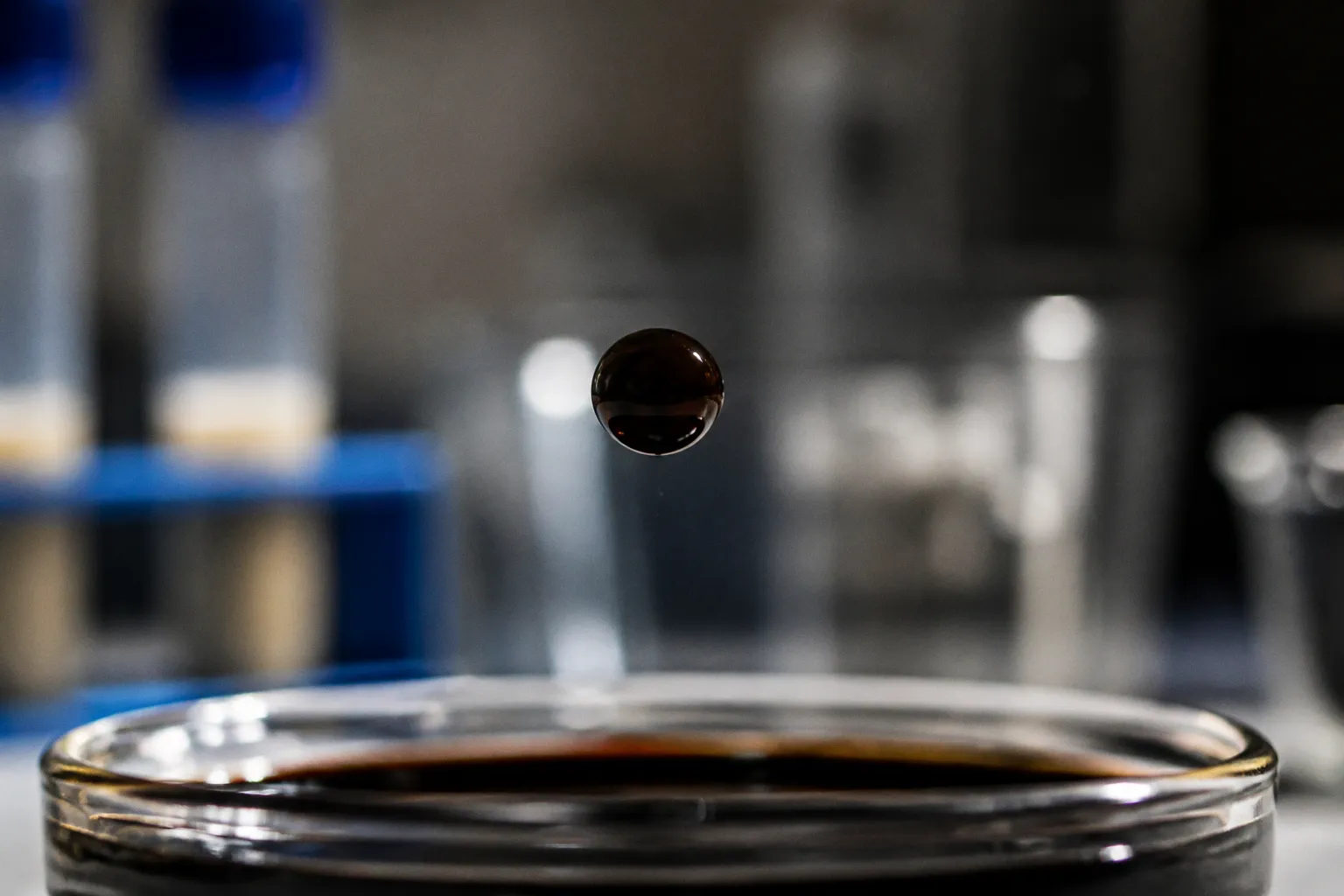
And the chemistry doesn't care whether you're wearing a chef's jacket or a t-shirt. The same reactions happen in your saucepan. What changes is the precision you can bring to them, and that is what this checklist is built to give you.
The Scientific Origins of Culinary Transformation
Before 1988, cooks cooked and scientists studied, and the two tribes rarely crossed the river. When Kurti and This held their workshops at the Royal Society of London and at colloquia across France, they were not trying to invent a new cuisine. They were trying to name a missing field: the physical and chemical transformations of food that happen between raw ingredient and finished dish. Browning, gelatinization, emulsification, denaturation, Maillard cascades — the long vocabulary of how heat and motion rearrange molecules, applied to what we actually eat.
Molecular gastronomy is not a style of cooking. It is a discipline that studies the transformations cooking performs.
What followed in the 1990s and 2000s — the foams, the gels, the spheres, the tableside smokes — was an applied branch of that discipline, often grouped under the broader banner of modernist cuisine. The two are not synonyms, and this is the single confusion worth clearing up before you begin. Modernist cuisine is a culinary movement with a manifesto, a way of thinking about plating, sourcing, and the dining experience. Molecular gastronomy is the underlying science that movement borrowed, the way Impressionism borrowed from optics. If you remember only one thing from this section, remember that the term describes a study, not a plating style. That distinction keeps the home cook from chasing the spectacle when the substance is what teaches.
Mastering Food Rheology and Hydrocolloids
If molecular gastronomy has a backbone, it is food rheology — the study of how food flows, deforms, and holds shape under stress. Why does honey pour slowly while water rushes? Why does a perfectly reduced sauce cling to the back of a spoon instead of sliding off? Why does a basil leaf feel like silk and a raw oyster feel like a small ocean? The answers live in the tangle of long-chain molecules we call hydrocolloids.
Hydrocolloids are long-chain molecules — most often derived from seaweed, seeds, bacteria, or fruit — that trap water and other liquids into loose networks. They are the hidden infrastructure of texture, the part of food that you feel before you taste. Without them, mayonnaise separates, ice cream crystallizes, and that basil sphere would collapse into a puddle before it reached your plate. With them, a kitchen becomes a small ecology, where a quarter-gram of the right powder can flip a liquid into a gel or an emulsion into something that holds for a week.
Three of them sit at the center of any beginner's kit, and they are not interchangeable:
| Hydrocolloid | Source | What it does in the kitchen | Typical use level |
|---|---|---|---|
| Agar-agar | Red algae | Forms a brittle, heat-reversible gel; sets around 32–40 °C, melts near 85–95 °C | 0.2–2% by weight |
| Carrageenan | Red algae (kappa, iota, lambda types) | Kappa and iota form elastic gels; lambda thickens without gelling | 0.1–1.5% |
| Xanthan gum | Fermented by Xanthomonas campestris on sugars | Adds slip and suspension, no true gel; stable across heat and pH | 0.05–0.5% |
| Sodium alginate | Brown algae | The gelling half of basic spherification; reacts with calcium to form a membrane | 0.5–1% in the bath liquid |
| Calcium chloride | Mineral salt | Cross-links alginate into a thin gel skin in the setting bath | 0.5–2% in water |
Agar gives you the cleanest, most gelatin-like set, but it is brittle — it shaves instead of stretching. Carrageenan, especially the iota form, gives a softer, more elastic texture, the kind that wiggles on the spoon. Xanthan does not gel at all; it thickens. It is what keeps the particles in a vinaigrette suspended when the dressing sits on the shelf, and it is what gives modernist sauces their glossy, slow-pouring drape. Working with them is a little like learning three different instruments: each plays the same scales but with a different voice. My own habit, after years of testing, is to reach for agar when I want a clean slice, iota carrageenan when I want a wobble, and xanthan when I want the liquid to behave like a thicker version of itself.
Core Techniques: Spherification, Foaming, and Cryogenics
Three techniques built the public reputation of molecular gastronomy, and three is a comfortable number for a beginner to start with. None of them demands a chemistry degree. Each one asks for care with measurement and patience with the process.
Spherification comes in two dialects. Basic spherification works when your flavored liquid already contains calcium — dairy, for instance — and you drop it into a sodium alginate bath. A thin gel skin forms instantly around the drop. Reverse spherification, the more controllable version, submerges an alginate-flavored liquid into a calcium chloride bath. The 0.5–1% sodium alginate and the 0.5–2% calcium bath are not arbitrary numbers. They are the working range where a sphere forms without collapsing on one end or staying liquid forever on the other. pH matters too: liquids below about pH 3.7 — straight lemon juice, for example — will not set without added calcium in the food itself, because the alginate chains need available calcium ions to cross-link. When the sphere bursts on the tongue, what you are tasting is the inside of that membrane giving way, a tiny edible architecture collapsing on cue.
Foaming uses a different lever: soy lecithin, an emulsifier pulled from soybeans, at roughly 0.3–1% in a flavored liquid. Whisk or use an immersion blender until the surface gathers a stable raft of pale bubbles. Scoop with a spoon. The result is something between a sauce and an air, a delivery system for aroma that hits the nose before the tongue registers anything. This is why a basil foam on a tomato dish feels so different from a basil purée even when the flavor compounds are identical: the volatile aromatics reach the olfactory receptors faster, suspended in air instead of dissolved in water. The flavor is the same; the sequence is different.
Cryogenics is the dramatic one, and the one most worth treating with care. Liquid nitrogen sits at −196 °C, the temperature at which nitrogen gas is squeezed into liquid form under pressure. Pour it into a custard base and you can flash-freeze it into ice cream in under a minute, with crystals so small the result is smoother than any churned gelato. It is also unforgiving. A splash of liquid nitrogen on skin causes severe cold burns, and the gas it releases displaces oxygen in enclosed spaces. Do not use liquid nitrogen without training, ventilation, and proper cryogenic gloves. At home, dry ice (solid CO₂, around −78 °C) is a far gentler substitute for most freezing and smoking effects, with the same respect for ventilation. If you are new to this, start with dry ice; graduate to liquid nitrogen only in a properly equipped kitchen.
Precision is the real ingredient. Weigh, do not estimate. Temperature, not intuition.
Essential Equipment and Precision Measurement Standards
You can do respectable molecular gastronomy with less gear than the cooking shows suggest. You cannot do it without precision. A kitchen scale that reads in grams is non-negotiable. A digital thermometer that reads to within a tenth of a degree is close behind. Everything else is support.
Here is the kit I would suggest as a starting point, ordered by how much it actually matters when you are first learning the reactions:
1. A precision scale (0.1 g resolution). Hydrocolloid percentages are not a guideline. A recipe calling for 1% agar in 500 g of liquid needs exactly 5 g. Estimating 5 g by eye is the difference between a sliceable gel and a liquid that never sets.
2. A digital thermometer. Gel-setting temperatures, sugar stages, oil for deep-frying — they all collapse to specific bands of heat, and your tongue is not a calibrated instrument.
3. An immersion circulator (sous vide). Holding liquids at exact temperatures for long stretches is half of modernist technique, and a single immersion circulator does it reliably.
4. A pH meter or narrow-range pH strips. Spherification depends on it. Plain litmus paper is not accurate enough to tell you whether your citrus juice sits at 3.0 or 4.0, and that difference decides whether your spheres form at all.
5. A whipping siphon and N₂O chargers. For gels that set cold, foams that hold for an hour, and infusions that take minutes instead of days.
6. Fine-mesh strainers and a chinois. Clarification is its own branch of this discipline, and the humble strainer does most of the work.
7. Cryogenic gloves and a well-ventilated space — only if you intend to work with liquid nitrogen or dry ice. Do not skip these, even once.
Notice what is not on this list: a centrifuge, a rotary evaporator, a vacuum chamber, a freeze dryer. Those are professional tools, and they will not teach you the reactions any better than a saucepan will. The deeper unknown in this whole field, in fact, is how much the equipment gap matters versus how much the ingredient gap matters — and in my experience, the ingredients matter more. Buy the chemistry first; the gadgets come later, and only if you find yourself reaching for a reaction that your saucepan cannot give you.
Sensory Analysis and the Perception of Mouthfeel
The reason this whole discipline matters at home, in the end, is the mouth. A molecular gastronomy dish is not impressive because of what it looks like. It is impressive because of how the texture changes the way flavor arrives. This is sensory analysis in action — the branch of food science that links chemistry to perception, the part of the discipline that most often gets left out of the glossy photographs.
Mouthfeel is built from three things working together: how a food deforms against the tongue, how it releases its aroma as it warms on the palate, and how it leaves residue behind. When you eat a mango purée, all three happen at once, like instruments joining in mid-measure. When you eat a mango sphere, the gel membrane stretches, then bursts, then floods the mouth in a single pulse. Same chemistry, different timeline — and the brain registers it as a different food. This is not a trick. It is the literal mechanism by which food scientists design texture-modified meals for people with dysphagia, for elderly eaters, for anyone whose relationship to food is shaped by how the bite feels rather than what it looks like on the plate.
If you take only one practical idea home from all this, take this: taste is a sequence, not a snapshot. The same ingredient can produce radically different eating experiences depending on how it is structured, and that is what molecular gastronomy teaches, more than any foam or sphere. It is a way of paying close attention to what your food is actually doing while you chew, and of noticing — really noticing — that the texture is half the flavor all along.
Your First Lab Day
If you're ready to try one thing this weekend, this is the path I would walk, and the only one I'd commit to before buying anything else:
- Order a small bag each of sodium alginate, calcium chloride, agar-agar, and soy lecithin from a culinary supplier that publishes lot numbers and expiration dates.
- Pick up a 0.1 g kitchen scale and a digital thermometer if you do not already own them.
- Read the pH of your chosen flavor liquid with strips; aim for pH 4 or higher for direct spherification, or use reverse spherification for anything more acidic.
- Mix 1% sodium alginate into the flavored liquid with an immersion blender; let it rest in the refrigerator for at least an hour to let air bubbles escape.
- Prepare a 1% calcium chloride bath in a shallow bowl, stirring until fully dissolved.
- Drop teaspoons of the alginate liquid into the bath; let them sit for 30–60 seconds.
- Lift the spheres out with a slotted spoon, rinse briefly in clean water, and serve within a few minutes.
- Write down in a small notebook: the texture on the spoon, the burst point in the mouth, the aroma on the nose, and what you would change next time.
That last step is the one that turns the exercise into science. Without the note, you've made a snack. With the note, you've done an experiment, and you have begun the slow, patient work of learning how your own kitchen responds to these reactions. From here, the discipline opens up rather than narrows down — into fermentation, into the chemistry of browning, into the architecture of emulsions that hold for weeks instead of hours. The first sphere is just the door.