Rhodiola rosea extract stability: processing errors and fixes
You can put Rhodiola rosea extract into a beverage, gummy, bar, powder, shot, or dairy-adjacent "functional" thing and still lose the compounds you paid for before the product reaches the shelf. That is the part marketing usually forgets to mention.
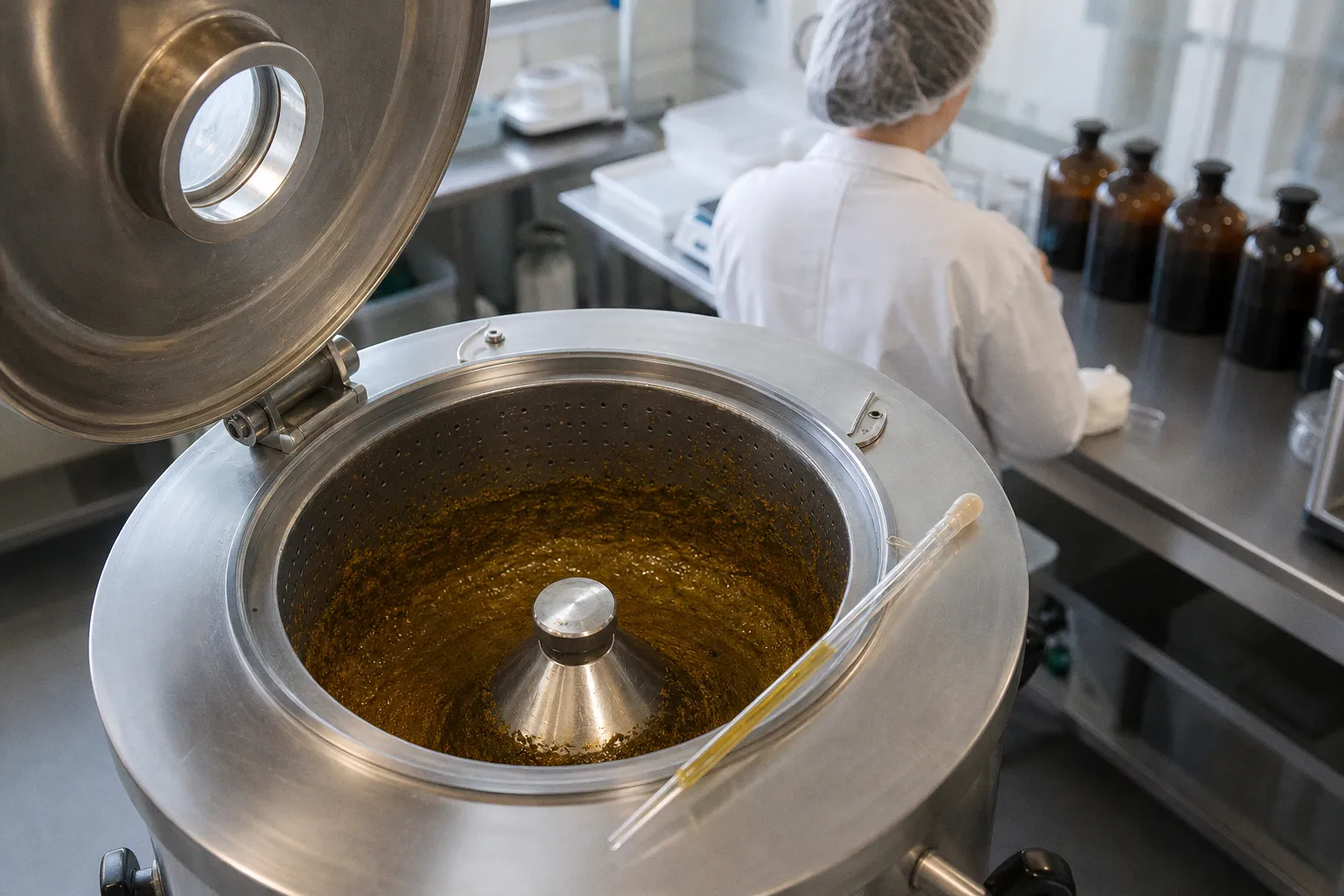
You can put Rhodiola rosea extract into a beverage, gummy, bar, powder, shot, or dairy-adjacent "functional" thing and still lose the compounds you paid for before the product reaches the shelf. That is the part marketing usually forgets to mention. The label says rhodiola. The process may have quietly mugged the salidroside and rosavins in the back room.
Rhodiola rosea extract stability in food processing is not a branding problem. It is a heat, pH, light, oxygen, and moisture problem. Very glamorous. Very annoying. Very real. If you treat rhodiola like a generic botanical dust you can toss into any hot, acidic, transparent product, you are not formulating. You are donating bioactives to chemistry.
The compounds are not equally fragile, which is where formulators get sloppy
Rhodiola extracts are usually standardized around marker compounds, especially salidroside and rosavins. Those markers are not decorative. They tell you whether the extract you bought still resembles the extract you intended to sell.
Here is the first trap: not every rhodiola extract behaves the same. Plant origin, extraction solvent, drying method, and standardization target all shift the salidroside-to-rosavins profile. A process that is "fine" for one extract can be rough on another. This is why copying a supplier's one-page spec sheet into your product development file is not a stability program. It is paperwork with confidence issues.
Salidroside tends to be the heat-sensitive troublemaker. Once processing temperatures push above about 80°C, its degradation accelerates. That does not mean every molecule drops dead at 81°C. Food chemistry is not a cartoon switch. It means the breakdown rate starts moving in the wrong direction fast enough that a normal process can become a potency leak.
Rosavins bring a different headache. In aqueous systems, they are vulnerable to hydrolysis, especially at pH extremes — below 3 or above 8. So if your brilliant concept is a sharp, shelf-stable acidic wellness shot with rhodiola floating in it for six months, congratulations: you have created a nice little hydrolysis spa.
The mistake is treating rhodiola as an ingredient. In processing, it behaves more like a guest with allergies.
A useful formulation mindset is simple: protect the markers from the abuse your product format naturally creates. Beverages attack with water and pH. Gummies attack with heat and acid. Bars attack with moisture migration and oxygen. Clear bottles attack with light. Powder blends attack with humidity and poor packaging. None of this is mysterious. It just gets ignored because the word "adaptogen" sounds more expensive than "hydrolysis."
Heat: the fastest way to turn premium extract into expensive filler
Thermal degradation is the blunt instrument. It is also the easiest mistake to make because food plants love heat. Heat pasteurizes. Heat hydrates gums. Heat dissolves sugars. Heat kills microbes. Heat also beats up sensitive phytochemicals if you make them sit through the whole show.
For salidroside stability in food, the practical danger zone starts when the extract sees temperatures above 80°C. Time matters, too. A brief exposure is not the same as a long hold. But pretending "it only hits 85°C for a bit" is not a validation strategy. It is wishful thinking in a hairnet.
The chemistry of thermal damage
1. Heat increases molecular motion. That sounds like textbook filler, but it matters. More motion means more chances for reactions that break, rearrange, or oxidize sensitive compounds.
2. Water makes degradation easier. In dry systems, heat can still damage bioactives, but aqueous systems often accelerate chemical changes. A hot rhodiola beverage base is a nastier environment than a cool dry premix.
3. Longer residence time compounds the damage. A high-temperature short-time process may be less destructive than a lower-temperature process with a long hold, depending on the exact matrix. Your process map needs time-temperature exposure, not just a maximum temperature scribbled in a notebook.
4. Post-process heat still counts. Hot filling, tunnel pasteurization, drying, and storage in warm warehouses all add to the bill. The ingredient does not care which department caused the damage.
The fix is not always "never heat rhodiola." Nice fantasy. Real plants have microbial specs, viscosity targets, filling lines, and retailers who dislike exploding bottles. The fix is to control where the extract enters the process and how much thermal history it collects.
For liquid products, late-stage addition is often the cleanest move. Process the base, cool it below the risk threshold, then add a properly prepared rhodiola solution or dispersion under sanitary conditions. For powder or bar systems, keep the extract away from high-heat steps when possible. Add it after baking, extrusion, or syrup cooking if the product design allows. If it does not, ask whether the format actually deserves rhodiola or just wants label jewelry.
| Processing situation | Common mistake | Better fix |
|---|---|---|
| Hot-filled beverage | Add rhodiola before pasteurization and hold it hot | Add after thermal treatment when process controls allow, or use protected extract |
| Gummies | Mix extract into hot acidified syrup | Cool mass as much as workable before addition; validate marker retention |
| Nutrition bars | Add extract before baking or high-heat binding | Use post-bake coating, cool blending, or encapsulated powder |
| Instant drink powder | Dry blend without humidity control | Use low-water-activity handling and barrier packaging |
| Ready-to-drink shot | Combine low pH, water, heat, and clear packaging | Adjust pH strategy, use protection, avoid UV exposure |
That table is not a magic protocol. It is a reality check. If your process stacks heat, water, acid, oxygen, and light, rhodiola stability will not be saved by a nice font on the label.
pH: the rosavin problem hiding in your "bright and refreshing" beverage
Food developers love acidity because consumers do. Acid makes beverages taste lively. Acid helps microbial control. Acid plays well with fruit flavors. Acid also punches certain botanical compounds in the face.
For rosavins, the more stable zone is roughly pH 4.0 to 7.0. Push below pH 3, and hydrolysis becomes a serious concern. Push above pH 8, and you are also asking for trouble. Since many functional beverages live around pH 2.8 to 3.5, this is not a niche issue. It is the default battlefield.
This is where rhodiola extract food formulation mistakes get painfully predictable. A brand wants a tart berry flavor. The developer acidifies with citric acid. The product goes into a clear bottle. The extract gets added early. A few months later, the lab sees marker drift. Everyone looks surprised. Nobody should.
Why pH breaks rosavins
Hydrolysis is chemical scissoring. Water participates in breaking chemical bonds. pH extremes speed that up. Rosavins in an acidic beverage are not sitting there peacefully waiting for the consumer. They are living in a reactive soup.
You can manage pH three ways:
- Formulate inside the stability window when the product allows it. A pH between 4.0 and 7.0 is friendlier for rhodiola markers. It may require different preservation, different flavor design, and actual product discipline. Tragic, I know.
- Use encapsulation or protective systems when the pH must be harsh. If the concept demands a sharp acidic shot, do not pretend the extract is naked and happy. It needs protection.
- Validate marker retention in the real matrix. Buffer systems, sweeteners, acids, flavors, minerals, and preservatives can all change the environment. Water plus citric acid is not the same as your finished beverage.
The pH meter should not be a ceremonial object. Measure the finished product, not just the water phase before everything else goes in. Measure after processing. Measure during shelf-life. If the pH drifts, your stability assumptions drift with it.
Light and oxygen: the quiet wreckers in pretty packaging
UV exposure can induce photo-oxidation in rhodiola extracts. The usual result is a decrease in total phenolic content and a shift in sensory profile. Translation: less of what you wanted, more of what your sensory panel will describe politely as "earthy," "medicinal," or "not aligned with target."
Clear bottles sell well because consumers like seeing the product. Food chemistry does not care. If your rhodiola beverage sits under retail lighting in transparent packaging, the extract sees a slow, steady assault. The brighter and longer the exposure, the more you should worry.
Photo-oxidation also changes flavor. Rhodiola already has a botanical bitterness and earthy character depending on extract type and dose. Oxidation can make that profile rougher. Then the flavor house gets blamed. Sometimes fairly. Sometimes the real villain is packaging vanity.
Transparent packaging is a sales decision. For rhodiola, it is also a stability risk with a shelf appeal budget.
The practical fixes are boring because the best fixes usually are:
- Use amber, opaque, sleeved, or UV-blocking packaging when the product will face light exposure.
- Keep oxygen pickup low during mixing and filling.
- Avoid unnecessary headspace.
- Consider oxygen-barrier materials for powders, bars, and liquids.
- Store bulk extract in sealed, light-protected containers before production.
If your operation uses open totes of botanical premix under bright lights for half a shift, do not call the ingredient unstable. Call the process what it is: casual.
This is also where operations data starts to matter. Lot movement, storage time, line holds, and retail handling all shape real-world quality. Food companies are increasingly tying formulation decisions to inventory and store-level systems; the same operational logic behind retail automation and POS technology reshaping store operations applies here in a less glamorous way: if you cannot track where the product sits and for how long, you are guessing about exposure.
Microencapsulation: not magic, but better than wishful thinking
Microencapsulation is the workhorse fix for protecting rhodiola rosea in food processing. The basic idea is simple: surround the extract with a carrier material that shields it from oxygen, moisture, heat, light, or direct contact with an unfriendly matrix.
Common carriers include maltodextrin and gum arabic. Depending on the carrier system and process, encapsulation efficiency often falls around 70–90%. That is a useful range, not a guarantee. Encapsulation can reduce degradation, improve handling, mask bitterness, and make dosing more uniform. It can also fail if you use the wrong carrier, wrong particle size, wrong storage conditions, or wrong processing step.
Let’s strip away the mystique.
What encapsulation is actually doing
1. The extract is dispersed into a carrier solution or matrix. The carrier has to be compatible with the extract and the final food system.
2. The mixture is dried or structured into particles. Spray drying is common, though not the only method. Drying conditions must be controlled because heat-sensitive compounds do not appreciate being "protected" by a process that cooks them.
3. The carrier forms a physical barrier. That barrier slows contact with moisture, oxygen, and reactive components in the food.
4. The particles release the extract during consumption or digestion. Ideally, not during storage in a hot acidic warehouse situation. Again: validate.
Maltodextrin is popular because it is cheap, functional, and easy to process. Gum arabic brings good emulsification and film-forming behavior. A blend can perform better than either alone, depending on the matrix. But carriers have trade-offs. Maltodextrin can increase hygroscopicity depending on dextrose equivalent. Gum arabic may affect viscosity and cost. Both can influence mouthfeel.
Encapsulation is most useful when the product format is hostile but commercially non-negotiable: acidic drinks, flavored powders, gummies, chewables, and bars with moisture migration. It is less necessary when the extract is used in a low-moisture capsule-like format, though this article is about foods, not supplement capsules pretending to be dinner.
Do not buy an encapsulated rhodiola powder and assume the job is done. Ask for marker retention data under conditions close to your product. Heat exposure. pH. water activity. Packaging. Light. Shelf-life. If the supplier only provides a glossy brochure and an "adaptogenic performance matrix," smile politely and request actual analytical data.
Water activity: the number that separates stable powder from clumpy regret
Water activity, written as aw, measures how available water is for microbial growth and chemical reactions. It is not the same as moisture content. Two powders can have the same moisture percentage and different water activity because water binds differently depending on the ingredients. This is one of those concepts that sounds fussy until your powder cakes, oxidizes, and fails assay.
For long-term rhodiola stability, keeping water activity below 0.3 is a strong target. Low aw helps limit moisture-induced degradation and slows many reactions that chew up sensitive compounds. This matters in instant drink mixes, powdered functional blends, bar inclusions, and dry premixes.
High humidity during manufacturing is the classic silent failure. The batch leaves blending in decent shape, picks up moisture during filling, spends three weeks in a warm distribution center, and arrives as a botanical brick with declining markers. Everyone blames "natural variability." Sometimes nature is innocent. Your packaging spec did it.
Practical controls that actually help
- Condition the production room when handling hygroscopic powders. If the room feels like a steam room, your powder knows.
- Use moisture-barrier packaging. Paperboard alone is not a stability plan. Foil laminates, high-barrier films, desiccants, and tight seals earn their keep.
- Limit open exposure time. Open drums, open hoppers, and long line stoppages invite moisture pickup.
- Measure aw on finished product and stability samples. Not just raw materials. Not just once.
- Watch interactions with other ingredients. Fruit powders, mineral salts, fibers, polyols, and flavors can shift moisture behavior. A rhodiola premix that behaves alone may misbehave in a full formula.
Bars deserve special suspicion. They look dry. They are often not low-aw enough to protect sensitive botanicals comfortably. Moisture migrates between phases: syrups, proteins, fibers, coatings, inclusions. If rhodiola sits in the wrong phase, it may see more available water than the product average suggests.
Sensory stability: because potency is not the only thing that moves
Most stability conversations obsess over active markers. Fair enough. But consumers do not drink HPLC chromatograms. They taste products.
Rhodiola can bring bitterness, astringency, herbal notes, and earthy tones. Processing stress can alter that profile. UV exposure and oxidation may reduce phenolics and shift flavor. pH changes can alter perception. Encapsulation can mask bitterness but add powdery mouthfeel or delayed release. Carriers can mute or muddy flavor. Sweeteners can cover harshness until storage changes the balance.
This is why sensory analysis belongs in the stability plan, not as a late-stage panic exercise. Run accelerated storage if appropriate, but do not confuse it with real-time shelf-life. Taste samples at intervals. Compare protected and unprotected extract. Compare packaging. Compare pH variants. Use trained panel notes if you have them; use disciplined internal tasting if you do not.
A product that loses a meaningful chunk of its salidroside is a problem. A product that loses a meaningful chunk of its salidroside and now tastes like a wet forest floor is a recall-shaped problem. The first is a chemistry question. The second is a marketing and operations question wearing chemistry clothing.
Sensory drift also tells you what your analytics missed. Off-flavors can be early warnings of oxidation, hydrolysis by-products, or carrier breakdown long before the lab calls a marker out of spec. If something tastes wrong in later storage and the HPLC still looks fine, believe your tongue. Investigate.
A stable rhodiola program is a process map, not a hope
The temptation in botanical formulation is to treat the extract as the variable and the rest of the product as fixed. That is backwards. The extract will do what its chemistry tells it to do. The format is the controllable variable.
A useful stability plan for rhodiola in food pulls three threads together:
- Process design. Where the extract enters, what temperatures it sees, what pH environment it lives in, and how long it stays there.
- Packaging and storage. Light protection, oxygen barriers, moisture control, and realistic time-temperature expectations across the supply chain.
- Validation. Real-time and accelerated stability in the actual finished matrix, with both analytical marker tracking and sensory evaluation.
If you skip any of the three, you are essentially running a marketing claim through a chemistry department and calling it a launch. That is how brands end up reformulating in year two because the year-one product quietly fell apart in storage, in transit, or under the retail lights.
The good news: rhodiola is not impossibly fragile. It is reasonably well-behaved if you respect the matrix. Put it where it belongs in the process, treat the package as part of the formulation, and stop pretending the label is the product. The label is a promise. The chemistry is whether you kept it.